
Jump to section


View Sumitomo Corporation's Sustainability : Climate Change
To further advance our efforts to address climate change, we updated the Sumitomo Corporation Group’s carbon neutrality target in February 2026.
Also, in the Yukashoken Houkokusho (Japanese annual securities report) and Annual Financial Report for FY2025, with a view to future mandatory disclosure under the SSBJ (Sustainability Standards Board of Japan) standards, we proactively disclose certain information that is considered useful to investors.
To identify the risks and opportunities arising from climate change and apply them to our business activities, we supported the TCFD recommendations in March 2019, and since then we have been disclosing information based on the TCFD framework.
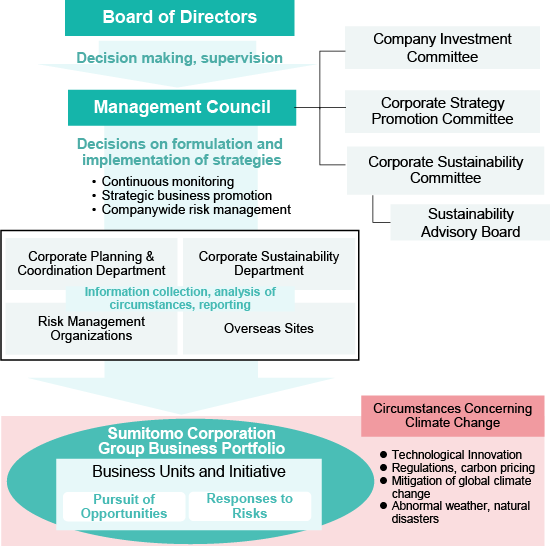
The Board of Directors renders decisions concerning key management matters in light of the diverse risks and opportunities related to climate in the Group’s wide range of business activities. Additionally, the Board of Directors oversees the decision-making and business execution by the Management Council and executive officers.
For decision-making on climate-related important management matters, based on the division of authority clearly stipulated in the Board of Directors regulations and other rules, the Board of Directors deliberates on and determines the formulation and revision of climate-related policies and targets; risks and opportunities across the overall business portfolio, including those related to climate; important initiatives related to the promotion of sustainability; and the handling of important individual cases, all of which are submitted to the Board of Directors after review by the Management Council and its advisory bodies, including Corporate Sustainability Committee. The Board of Directors receives reports on the analysis of risks and opportunities across the overall business portfolio, including those related to climate, and the status of responses thereto at least every six months.
In addition, the Board of Directors receives annual reports from the Corporate Sustainability Department on the analysis of diverse climate-related risks and opportunities identified in individual businesses, the status of responses thereto, and monitoring metrics, and supervises the status of initiatives by the business execution side, including the Management Council.
Also, to ensure that the Company’s officers, including directors, are more aware of our commitment to the advancement of sustainability management, evaluation based on the non-financial indicators (“climate change”) is used to calculate the amount of the remuneration of officers. For more details, please visit our website "Executive Remuneration Plan".
In addition, the Board of Directors has identified the types of knowledge, experience, and other competencies (hereinafter “Skills”) that enable the Board of Directors to adequately fulfill its roles, and these Skills include those related to sustainability. The Skills of individual directors are determined after considering all their attributes, including their careers, knowledge, experience, capabilities, qualifications, and specific achievements, and discussing these with individuals concerned. The Board of Directors includes multiple directors with sustainability-related skills. For more details, please visit our website "The Skills such as knowledge, experience and competencies, etc., that the Board of Directors is required to possess, and Skills that Directors currently in office possess".
The Management Council and executive officers are responsible for decision-making and business execution of important climate-related management matters of the Group in accordance with the Company regulations. The Management Council makes comprehensive decisions after consulting with the Corporate Sustainability Committee and other committees in order to assess and manage diverse climate-related risks and opportunities and make effective decisions.
In addition, with regard to climate-related initiatives and response to risks and opportunities, the Corporate Sustainability Department, which is a specialized organization in charge of planning and disseminating measures within the Company, and related corporate organizations such as the Corporate Planning & Coordination Department, which plans the Company’s overall management plan and important measures, as well as the personnel responsible for promoting each topic in each Business Group and overseas regional organization, all work together. Based on information provided by the Group’s internal research organizations, the Business Groups, overseas regional organizations and other organizations, we formulate and promote group-wide plans and measures.
In addition, we have established the Sustainability Advisory Board, which is comprised of outside experts on ESG, to obtain advice and recommendations on our overall sustainability management.
The governance structure for our climate-related management is as follows.
For more details about the situation of corporate governance, including our sustainability management, please visit our website "Corporate Governance" page.
We attach importance to the global consensus reflected in the Paris Agreement, and we established the Policies on Climate Change Issues in order to play a more active role in achieving the carbon neutrality goal of society in alignment with the Agreement. After the Board of Directors adopted a resolution concerning the Group’s Policies on Climate Change Issues in FY2019, we have been regularly reviewing our policies. In February 2026, we updated the Group’s carbon neutrality targets based on the GHG Protocol with the aim of strengthening accountability in line with emission categories, in light of the completion of our Scope 3 emissions calculations and disclosure and in anticipation of the application of the SSBJ (Sustainability Standards Board of Japan) standards.
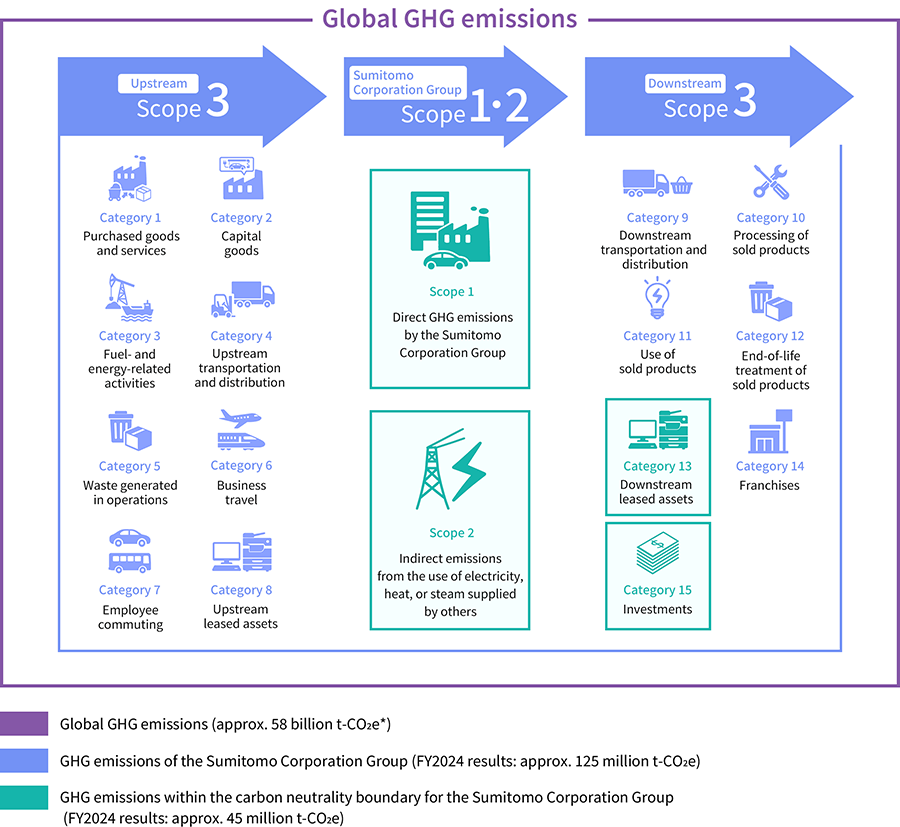
Global GHG emissions (approx. 58 billion t-CO2e*)
GHG emissions of the Sumitomo Corporation Group (FY2024 results: approx. 117 million t-CO2e)
GHG emissions within the carbon neutrality boundary for the Sumitomo Corporation Group
(FY2025 results: approx. 42 million t-CO2e)
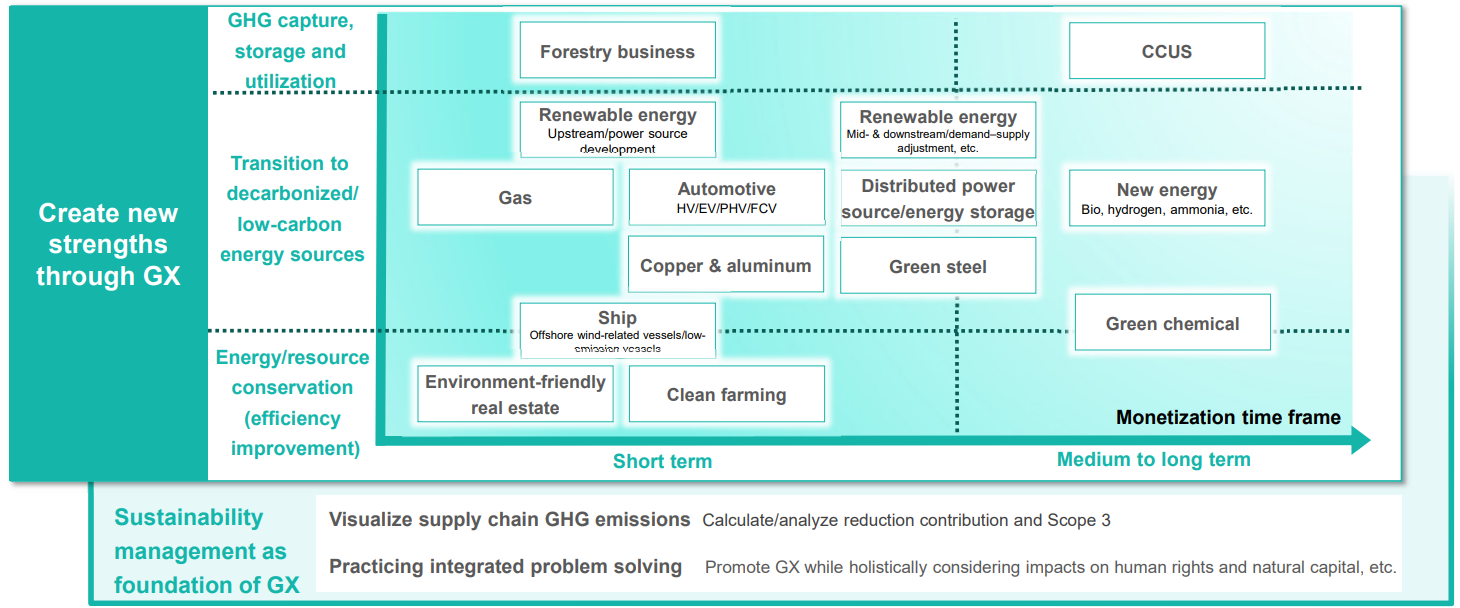
In the new Medium-Term Management Plan started in FY2024, we will further strengthen our businesses where we have strengths and competitive advantages through green transformation (GX) in the short term. At the same time, we pursue GX considering the time horizon for monetization (including market formation) in various industries and create new strengths for the future in the medium to long term.
The avoided emissions are quantification of emissions from society avoided when new products and services replace earlier ones. We use this as an indicator to visualize the contribution by our businesses to achieve a carbon-neutral society during internal discussion. The transition to a decarbonized society will be a long-term process, and during this process, a wide range of new products and services will be needed. In addition to developing low-carbon products, the Sumitomo Corporation Group is advancing the supply of materials essential for renewable energy and initiatives toward market expansion.
As one example, the avoided emissions for FY2025 through the operation of our renewable energy business are indicated below.
| Details of Contribution | Baseline | Calculation Formula | Avoided Emissions |
|---|---|---|---|
| Contribution by creating renewable energy | Energy mix of each country | Power generating facility capacity [MW/year] × Annual operating hours × Emission factor [t-CO2/MWh] × Sumitomo Corporation’s ownership percentage | 3,265 thousand t-CO2e |
It should be noted that the avoided emissions are reference indicators showing the extent of our contribution to society through our businesses and do not represent a set off the Group’s GHG emissions.
Based on the business models of each of the Group’s businesses, the climate-related risks and opportunities that can reasonably be expected to affect the Group’s prospects are as shown in the table below, organized by individual businesses.
The risks and opportunities below are identified following the process of “3. Risk Management”.
| Businesses | Categories | Details | Time horizonsFinancial impact | ||
|---|---|---|---|---|---|
| Short-term | Medium-term | Long-term | |||
| Tubular products business | Transition risks | Risk of business contraction associated with the transition to a decarbonized society | Slight | Moderate | |
| Financial impact of carbon pricing | Slight | Slight | |||
| Shipping business | Transition risks | Risk of business contraction associated with the transition to a decarbonized society | Slight | Slight | |
| Business opportunities | Opportunity for business expansion associated with the transition to a decarbonized society | ||||
| Automotive business | Transition risks | Financial impact of carbon pricing | Slight | Moderate | |
| Retail business | Transition risks | Financial impact of carbon pricing | Slight | Slight | |
| Financial impact of rising energy prices | - | - | |||
| Food business | Transition risks | Financial impact of carbon pricing | Slight | Slight | |
| Copper business | Transition risks | Financial impact of carbon pricing | Slight | Slight | |
| Business opportunities | Opportunity for business expansion associated with the transition to a decarbonized society | + | + | ||
| Aluminum business | Transition risks | Financial impact of carbon pricing | Slight | Moderate | |
| Thermal coal and Coking coal business | Transition risks | Risk of business contraction associated with the transition to a decarbonized society | Slight | Slight | |
| Financial impact of carbon pricing | Slight | ||||
| Iron ore business | Transition risks | Risk of business contraction associated with the transition to a decarbonized society | Slight | Slight | |
| Chemicals business | Business opportunities | Opportunity for business expansion associated with the transition to a decarbonized society | Slight | Slight | |
| Agricultural materials distributor business | Physical risks | Risk of crop yield decline | Moderate | Moderate | Moderate |
| Power generation business | Physical risks | Operational disruption due to flooding | Moderate | Moderate | |
| Transition risks | Risk of business contraction associated with the transition to a decarbonized society | Slight | Slight | Slight | |
| Natural gas and LNG business (upstream interests) | Transition risks | Risk of business contraction associated with the transition to a decarbonized society | Slight | - | |
| Financial impact of carbon pricing | Significantly | ||||
| Natural gas and LNG business (trading) | Transition risks | Risk of business contraction associated with the transition to a decarbonized society | Slight | ||
| Business opportunities | Opportunity for business expansion associated with the transition to a decarbonized society | Slight | Slight | ||
| Opportunity for shifting to low-carbon products | Slight | Slight | |||
| Offshore oil and gas production facility chartering business | Transition risks | Risk of business contraction associated with the transition to a decarbonized society | Slight | Slight | Slight |
Significant : ±30 billion yen or more to less than 50 billion yen
Moderate : ±10 billion yen or more to less than 30 billion yen
Slight : Less than ±10 billion yen
Short-term (2026) : Aligned with the period of the Group’s Medium-Term Management Plan
(FY2026 is the final year of the current plan.)
Medium-term (2035) : Set to align with the period of the Group’s interim emission reduction targets
Long-term (2050) : Set to align with the Group’s goal of achieving carbon neutrality in 2050
We have analyzed climate-related risks and opportunities in each individual business that could affect the Group’s prospects as follows.
The financial impacts from risks on the relevant businesses are calculated without taking into account our countermeasures, based on RCP8.5 scenario*1 of the IPCC *2, which assumes a 4°C rise from pre-industrial levels by 2100, for physical risks, and based on the Net Zero Emissions by 2050 Scenario (NZE)*3 of the IEA for transition risks. Meanwhile, the financial impacts on the relevant businesses from opportunities are calculated taking into account the IEA’s NZE.
Regarding the risks of business contraction associated with the transition to a decarbonized society among transition risks, and the opportunities for business expansion associated with the transition to a decarbonized society, in order to objectively assess business resilience and new business opportunities in the event of significant changes in the business environment, we have analyzed the impacts on our individual businesses over the medium-term and long-term time horizons using the Stated Policies Scenario (STEPS)*4 in addition to the NZE, based on the social and economic conditions assumed by each scenario.
The scenarios mentioned above do not represent assumptions underlying our management policies or business strategies.
The financial impact expected to arise from carbon pricing in the future is calculated, except for the three businesses below, by multiplying the GHG emissions (Scope 1 and 2) of the relevant business during the reporting period by the carbon price outlook under the NZE in the “World Energy Outlook 2025” published by the IEA. For upstream interest businesses, the calculation assumes that existing businesses will be held until the end of mining.
| Transition risks | In the tubular products business, we recognize the risk of business contraction associated with the transition to a decarbonized society and the financial impact of carbon pricing. |
|---|---|
| Risk details | ■Risk of business contraction associated with the transition to a decarbonized society Demand for fossil fuels is expected to decrease under the IEA’s NZE, and we recognize the associated risk of a decline in sales volume of energy tubular products used for the extraction, transportation, and storage of fossil fuels. Time horizon: Medium-term and long-term ■Financial impact of carbon pricing We recognize the risk that the introduction of the EU Emissions Trading System (EU ETS) and the Carbon Border Adjustment Mechanism (CBAM) will create a competitive gap with competing manufacturers within Europe, leading to a decline in tubular products sales volume in Europe. Time horizon: Medium-term and long-term |
| Financial impact in the current/next fiscal year | There is no material financial impact in the current or next fiscal year. |
| Strategies and mitigation measures | ■Risk of business contraction associated with the transition to a decarbonized society We will continue to sell tubular products for climate change countermeasures such as CCS, CCUS, and geothermal power generation, while expanding peripheral business beyond tubular products sales to energy companies. ■Financial impact of carbon pricing Amid various initiatives by the public and private sectors and industry associations to promote reductions in GHG emissions from blast furnaces, we will continue to support reductions in GHG emissions from upstream operations (steel manufacturers as our suppliers), including the conversion from blast furnaces to electric furnaces and lowering the carbon footprint of iron-making reduction methods, through an internal organization that supports these initiatives. We will also engage with downstream operations (energy companies as our customers) to gain their understanding of the environmental value of emission reductions and their willingness to bear the associated costs. |
| Expected financial impact | ■Risk of business contraction associated with the transition to a decarbonized society <Financial impact> Medium-term: Slightly negative; Long-term: Moderately negative (Under the STEPS: Slightly positive for both medium-term and long-term) The NZE projects a decline in demand for fossil fuels, and we will continue to monitor the associated impact on demand for energy tubular products. On the other hand, as energy demand is expected to continue increasing with global economic growth and population growth, we assume that fossil fuel extraction will continue, and we are formulating our strategy on the premise that demand for energy tubular products will be maintained. ■Financial impact of carbon pricing <Financial impact> Medium-term and long-term: Slightly negative We believe that the financial impact described above can be reduced by restoring upstream competitiveness through the implementation of strategies and mitigation measures. |
| Transition risks Business Opportunities |
In the shipping business, we recognize both the risk of business contraction and the opportunity for business expansion associated with the transition to a decarbonized society. |
|---|---|
| Risk / Opportunity details | Shipping demand is expected to increase over the medium and long term under the STEPS and remain largely flat under the NZE. We recognize the risk that, as the transition to a decarbonized society reduces coal demand and consequently coal transportation demand, charter revenue will decline for the bulk carriers we own and manage that are partially engaged in coal transportation. We also recognize that while the introduction of environmental regulations and taxation by the International Maritime Organization (IMO) and national authorities may increase investment burdens for low-carbon technologies and operating costs, demand for zero-emission and low-carbon vessels* is expected to rise, presenting opportunities for increasing charter and vessel sale revenue through changes in the cargo carried by bulk carriers or in their use and the introduction of zero-emission and low-carbon vessels. Time horizon: Medium-term and long-term
|
| Financial impact in the current/next fiscal year | There is no material financial impact in the current or next fiscal year. |
| Strategies and mitigation measures | While continuing to monitor cargo demand for bulk carriers including coal, laws and regulations in each country, market conditions, and trends in the technology and costs of zero-emission and low-carbon vessels, we will, in anticipation of the future introduction of environmental regulations and other trends, raise the ratio of zero-emission and low-carbon vessels in our owned vessel portfolio, examine ownership schemes for next-generation fuel vessels, and conduct interviews on charter demand. |
| Expected financial impact | <Financial impact> Medium-term and long-term: Slightly positive (Under the STEPS: Slightly positive for medium-term; moderately positive for long-term) Even if demand for bulk carriers engaged in coal transportation declines due to a decrease in coal transportation demand, we expect demand for bulk carriers in non-coal transportation to grow with global economic growth and population growth. While the outcome will depend on trends in international environmental regulations, over the medium and long term we plan to invest in the construction of next-generation fuel vessels and the installation of energy-saving devices on existing vessels. By responding early to forthcoming regulations, we expect to improve relative profitability by avoiding future carbon tax burdens, fines for regulatory violations, and replacement costs from the phase-out of inefficient vessels, and to enhance profitability by benefiting from green freight rates. |
| Transition risks | In the automotive business, we recognize the financial impact of carbon pricing. |
|---|---|
| Risk details | We recognize the risk that, with the introduction of carbon taxes, profit margins will decline by an amount equivalent to the carbon tax burden in businesses that use fossil fuels or electricity as a heat source during manufacturing. Time horizon: Medium-term and long-term |
| Financial impact in the current/next fiscal year | There is no material financial impact in the current or next fiscal year. |
| Strategies and mitigation measures | We have begun discussions with each operating company in the manufacturing area regarding measures toward carbon neutrality. The operating company with the largest emissions among these has already formulated a roadmap aimed at achieving zero Scope 1 and 2 emissions in 2050. The GHG emission reduction rate is monitored against a base year of FY2018, and the greening of electricity use is being advanced as a specific measure to reduce environmental impact. When this operating company formulated its carbon neutrality roadmap in FY2022, the milestone was a 30% reduction by FY2030 compared to FY2018, but this was achieved ahead of schedule in FY2024. We will continue, in line with our existing policy, to work on reducing the environmental impact across the supply chain by promoting energy-saving and electrified equipment as well as expanding the greening of electricity use. |
| Expected financial impact | <Financial impact> Medium-term: Slightly negative; Long-term: Moderately negative While the implementation of strategies and mitigation measures is expected to entail investment in energy-saving and electrified equipment as well as higher electricity costs from the greening of electricity use, we believe that the financial impact described above can be reduced. The financial impact of carbon pricing is a challenge across the entire supply chain, and we will continue to engage in dialogue with customers and suppliers. |
| Transition risks | In the retail business, we recognize the financial impact of carbon pricing and the financial impact of rising energy prices. |
|---|---|
| Risk details | ■Financial impact of carbon pricing We recognize the risk that, with the introduction of carbon taxes, profit margins will decline as the carbon tax burden is reflected in costs in energy-intensive manufacturing and distribution processes*. Time horizon: Medium-term and long-term
We recognize the risk that, with rising energy prices, operating costs will increase at our own sales locations, logistics centers, and processing centers. Time horizon: Medium-term and long-term |
| Financial impact in the current/next fiscal year | There is no material financial impact in the current or next fiscal year. |
| Strategies and mitigation measures | ■Financial impact of carbon pricing With the aim of reducing GHG emissions, we are working to improve logistics efficiency by introducing energy-saving equipment and high-efficiency storage equipment and by reducing the number of truck trips. Going forward, we will consider formulating a roadmap toward achieving the 2050 carbon neutrality target and will continue to work on improving logistics efficiency by reducing the number of truck trips. ■Financial impact of rising energy prices We will continue, in line with our existing policy, to work on curbing energy consumption at our own sales locations and on holding down unit energy costs by engaging electricity providers with competitive pricing, while also accelerating the introduction of energy-saving equipment over the medium and long term. |
| Expected financial impact | ■Financial impact of carbon pricing<Financial impact> Medium-term and long-term: Slightly negative Over the medium and long term, the implementation of strategies and mitigation measures is expected to entail expenditures for the introduction of energy-saving equipment and for improving logistics efficiency aimed at reducing GHG emissions, and we believe that the financial impact described above can be reduced. ■ Financial impact of rising energy prices Over the medium and long term, we expect expenditures associated with the introduction and renewal of energy-saving equipment, and the financial impact anticipated through the implementation of strategies and mitigation measures is expected to be limited. |
| Transition risks | In the food business, we recognize the financial impact of carbon pricing. |
|---|---|
| Risk details | We recognize the risk that, with the introduction of carbon taxes, profit margins will decline as the carbon tax burden is reflected in costs in the production of fruit at our own farms and in the ripening process at our own ripening and processing facilities. Time horizon: Medium-term and long-term |
| Financial impact in the current/next fiscal year | There is no material financial impact in the current or next fiscal year. |
| Strategies and mitigation measures | We will continue to work on reducing fertilizer-derived emissions by switching to low-nitrogen fertilizers and on expanding the introduction of renewable energy. |
| Expected financial impact | <Financial impact> Medium-term and long-term: Slightly negative In the short term, we expect expenditures associated with the introduction of energy-saving equipment, and we believe that the financial impact described above can be reduced through the implementation of strategies and mitigation measures. |
| Transition risks Business Opportunities |
In the copper business, we recognize the financial impact of carbon pricing and the opportunity for business expansion associated with the transition to a decarbonized society. |
|---|---|
| Risk / Opportunity details | ■Financial impact of carbon pricing We recognize the risk that operating costs will increase due to the strengthening of environmental regulations in production activities at mines in which we hold interests. Time horizon: Medium-term and long-term ■Opportunity for business expansion associated with the transition to a decarbonized society Against the backdrop of the global expansion of clean energy applications including renewable energy and electric vehicles and the advancement of AI-driven digitalization, a medium- to long-term increase in copper demand is expected under both the IEA’s STEPS and NZE. With the rise in copper prices driven by this increase in copper demand, we recognize the opportunity for increased revenue in production and sales activities at mines in which we hold interests. Time horizon: Medium-term and long-term |
| Financial impact in the current/next fiscal year | There is no material financial impact in the current or next fiscal year. |
| Strategies and mitigation measures | ■Financial impact of carbon pricing At certain mines, we have already implemented measures to reduce GHG emissions such as shifting to renewable energy. Going forward, we plan to shift 100% of the electricity used at other mines to renewable energy as well. ■Opportunity for business expansion associated with the transition to a decarbonized society The expansion of supply is expected to remain difficult due to the depletion of operating mines, the difficulty of developing new mines, and the strengthening of environmental protection regulations. At the same time, addressing the reduction of environmental impact across the entire supply chain has become important, and in this environment, stable supply over the medium and long term while giving consideration to the environment and society is required. We are working to acquire new interests through investment in overseas copper mines, expand production from existing interests, and contribute to the stable supply of copper that supports decarbonization, while also supporting the stable procurement of copper products and securing sustained revenue opportunities for our business. In addition, we are working to ensure a sustainable copper supply by improving operational efficiency, reducing environmental impact, and enhancing resource circulation across the entire product life cycle. |
| Expected financial impact | ■Financial impact of carbon pricing <Financial impact> Medium-term and long-term: Slightly negative Even if regulations are further strengthened going forward, the financial impact is expected to be limited through the implementation of strategies and mitigation measures. ■Opportunity for business expansion associated with the transition to a decarbonized society <Financial impact> Medium-term and long-term: Positive (Under the STEPS: Positive for both medium-term and long-term) Note: Fluctuations in copper prices associated with changes in copper demand entail a high degree of uncertainty, making it difficult to calculate the financial impact. |
| Transition risks | In the aluminum business, we recognize the financial impact of carbon pricing. |
|---|---|
| Risk details | We recognize the risk that operating costs from carbon pricing will increase in the aluminum smelting process at our aluminum smelter. Time horizon: Medium-term and long-term |
| Financial impact in the current/next fiscal year | There is no material financial impact in the current or next fiscal year. |
| Strategies and mitigation measures | We are working to reduce GHG emissions through operational improvements in the electrolysis process and are currently in the process of acquiring Renewable Energy Certificates (RECs). A key operating company has formulated a 2050 carbon neutrality target. |
| Expected financial impact | <Financial impact> Medium-term: Slightly negative; Long-term: Moderately negative In addition to the strategies and mitigation measures described above, we are considering multiple initiatives that contribute to reducing GHG emissions, and we believe that the financial impact described above can be reduced. |
| Transition risks | In the thermal coal and coking coal business, we recognize the risk of business contraction associated with the transition to a decarbonized society and the financial impact of carbon pricing. |
|---|---|
| Risk details | ■Risk of business contraction associated with the transition to a decarbonized society We recognize the risk of declining revenue and asset valuation in our upstream interest business for coking coal, due to the decline in coking coal demand and changes in the customer structure. Time horizon: Medium-term and long-term ■Financial impact of carbon pricing We recognize the risk that operating costs will increase in production activities at coal mines in which we hold interests, due to the strengthening of regulations on GHG emissions (particularly methane) and the introduction of carbon taxes. The government of the project host country has already set GHG emission reduction targets within the country. Time horizon: Short-term Notes:
|
| Financial impact in the current/next fiscal year | While carbon tax payments are incurred in the current fiscal year, no material impact on the carrying amounts of assets and liabilities is expected in the next fiscal year as a result of the financial impact in the current fiscal year. Financial impact in the current fiscal year: Slightly negative |
| Strategies and mitigation measures | ■Risk of business contraction associated with the transition to a decarbonized society Regarding the coking coal business, the interests we hold produce high-grade coking coal, and a certain level of demand is expected to be maintained under both the IEA’s STEPS and NZE, so the impact on the coking coal business is expected to be limited. We will continue to consider investments in coal mines that produce coking coal with these characteristics. At the same time, we recognize that, as part of the external environment surrounding the coking coal business, the launch of new coking coal mines has tended to be delayed in recent years due to factors such as permitting. ■Financial impact of carbon pricing At coal mines in which we hold interests, we are working to reduce emissions through improvement in operational efficiency. We are also contributing to decarbonization through investments in projects to utilize former coal mine sites (pongamia tree planting) including for use as biodiesel fuel, and in companies such as Loop, which operates a gas extraction business at open-pit coal mines. Going forward, we will continue to work to achieve emission reduction targets set by the government of the project host country as well as targets for emission reductions through our own efforts. |
| Expected financial impact | ■Risk of business contraction associated with the transition to a decarbonized society <Financial impact> Medium-term and long-term: Slightly negative (Under the STEPS: Slightly negative for both medium-term and long-term) As described above, our policy is not to acquire new interests in the thermal coal mine development business and to reduce equity production volume to zero in the late 2020s. Since the business is scheduled to have already been exited within the medium-term and long-term time horizons, there is no financial impact. The weight of thermal coal interests in our resource portfolio is relatively small, and the interests we currently hold are also scheduled to reach the end of their mine life in the near future. These interests produce high-grade coal, which is in relatively high demand, and are cost-competitive, providing a degree of resilience against price declines even in the event of falling demand. Regarding coking coal, over the long term, against the backdrop of policy developments such as the introduction and strengthening of carbon taxes in many countries and regions, the practical adoption of low-carbon steelmaking methods with lower CO2emissions and an increase in the ratio of electric furnace steel are expected to progress and lead to a decline in demand. However, in combination with CO2capture and storage technologies such as CCUS, steel production using blast furnaces is expected to be maintained for the time being. Furthermore, the Group’s upstream interest investment business is directed at the seaborne trade market, where coking coal demand is expected to increase under the STEPS and to decline modestly under the NZE, with supply declines preceding demand declines under both the STEPS and NZE. The interests we hold produce high-grade coking coal, and a certain level of demand is expected to be maintained under both the STEPS and NZE, so the impact on the coking coal business is expected to be limited. ■ Financial impact of carbon pricing <Financial impact> Short-term: Slightly negative Carbon taxes are factored into the full-year forecast for FY2026. |
| Transition risks | In the iron ore business, we recognize the risk of business contraction associated with the transition to a decarbonized society. |
|---|---|
| Risk details | We recognize the risk of declining revenue and asset valuation in our iron ore upstream interest business, due to the decline in iron ore demand resulting from the shift from blast furnaces to electric furnaces by steel manufacturers. Time horizon: Medium-term and long-term |
| Financial impact in the current/next fiscal year | There is no material financial impact in the current or next fiscal year. |
| Strategies and mitigation measures | Our iron ore-related businesses contribute to the stable supply of resources to Asia, with a focus on China and Japan. From the medium term onward, much of the production from the interests we hold is expected to consist of high-grade iron ore, which is in scarce supply, so the impact of declining iron ore demand from the increase in the ratio of electric furnaces is expected to be minor. We will continue to monitor the impact on demand from changes in iron-making and steelmaking methods in the steel industry’s response to the transition to a decarbonized society, and we will promote actions toward the stable supply of iron ore through the diversification and broadening of our customer base. |
| Expected financial impact | <Financial impact> Medium-term and long-term: Slightly negative (Under the STEPS: Neutral for both medium-term and long-term) Under the NZE, iron ore demand may decline with the increase in the ratio of electric furnaces in the steel industry, but the impact on high-grade iron ore, demand for which rises under both the blast furnace and electric furnace methods, is expected to be minor. As described above, much of the production from the multiple interests we hold is expected to be high-grade iron ore, and we recognize that the impact of declining demand will be minor or avoidable. |
| Business Opportunities | In the chemicals business, we recognize the opportunity for business expansion associated with the transition to a decarbonized society. |
|---|---|
| Opportunity details | ■Opportunities in green chemical products We expect demand for green chemical products to increase as a result of the transition to a decarbonized society, and in our green chemical sales business, we recognize the opportunity for increased revenue through the active promotion of green chemical products. Time horizon: Medium-term and long-term ■Opportunities in propane products With the medium- to long-term increase in LNG demand expected under the STEPS, demand for propane, which is used as a refrigerant in the LNG liquefaction process, is also expected to increase, and we recognize the opportunity for increased revenue in our propane sales business. Time horizon: Medium-term and long-term |
| Financial impact in the current/next fiscal year | There is no material financial impact in the current or next fiscal year. |
| Strategies and mitigation measures | ■ Opportunities in green chemical products We have obtained ISCC PLUS certification under International Sustainability & Carbon Certification for handling bio-based chemical products, and we have been conducting research to identify customer demand and suppliers that can meet that demand. Going forward, if additional certifications are needed based on societal demands, we will continue to acquire them, and will continue to gather information to identify, in a timely manner, the demand that is expected to grow and to find the suppliers that can meet it. ■Opportunities in propane products By establishing a new manufacturing base, we have built a business foundation that can continuously capture opportunities for selling propane for LNG applications. |
| Expected financial impact | ■Opportunities in green chemical products <Financial impact> Medium-term and long-term: Slightly positive (Under the STEPS: Slightly positive for both medium-term and long-term) The increase in demand for green chemical products is expected to be more pronounced under the NZE. ■Opportunities in propane products <Financial impact> Medium-term and long-term: Slightly positive (Under the STEPS: Slightly positive for both medium-term and long-term) The increase in demand for propane, which is used as a refrigerant in the LNG liquefaction process, is expected to be more pronounced under the STEPS. |
| Physical risks | In the agricultural materials distributor business, we recognize the risk of crop yield decline. |
|---|---|
| Risk details | As the likelihood of drought rises with the increase in average temperatures, in the event of a drought, we recognize the risk of declining sales and the risk of an increase in the allowance for doubtful accounts in our agriculture-related sales activities, due to the deteriorating profitability of farmers caused by crop yield decline. Time horizon: Short-, medium-, and long-term |
| Financial impact in the current/next fiscal year | There is no material financial impact in the current or next fiscal year. |
| Strategies and mitigation measures | To enhance resilience against fluctuations in sales, we have already been working on the appropriate control of selling, general, and administrative expenses and the optimization of our fixed cost structure, as well as on stricter credit screening and an increase in the ratio of collateral obtained, and we will continue these efforts. |
| Expected financial impact | <Financial impact> Short-term, medium-term, and long-term: Moderately negative In the event that the risk materializes, declining sales and an increase in the allowance for doubtful accounts are expected. While the implementation of strategies and mitigation measures is expected to entail an increase in management costs from enhancing credit screening processes and a decrease in sales opportunities from stricter credit screening, we are working to reduce the risk. |
| Physical risks Transition risks |
In the power generation business, we recognize the risk of operational disruption due to flooding and the risk of business contraction associated with the transition to a decarbonized society. |
|---|---|
| Risk details | ■Risk of operational disruption due to flooding With the increased likelihood of weather disruptions such as heavy rainfall accompanying rising average temperatures and seawater temperatures, we recognize the risk that, should flooding occur, our coal-fired power plants would face opportunity losses during operational disruptions and the incurrence of costs to restore facilities. Time horizon: Short-term and medium-term ■Risk of business contraction associated with the transition to a decarbonized society For coal-fired power generation, a phased reduction is progressing starting with developed countries, and significant decreases in demand are expected going forward under both the STEPS and NZE. For the gas-fired power generation business as well, while an increase in demand is expected under the STEPS, a decrease is expected under the NZE. In light of the above, while there is the risk of business contraction and assets becoming stranded as demand for coal-fired and gas-fired power generation declines, our coal-fired and gas-fired power generation businesses have entered into long-term power sales contracts, so the financial impact of decreased demand is expected to be limited. Time horizon: Short-term, medium-term, and long-term Notes:
|
| Financial impact in the current/next fiscal year | There is no material financial impact in the current or next fiscal year. |
| Strategies and mitigation measures | ■Risk of operational disruption due to flooding We have procured insurance for operational disruptions in preparation for losses should the risk materialize. ■Risk of business contraction associated with the transition to a decarbonized society Because we have entered into long-term power sales contracts, the financial impact of decreased demand for coal-fired and gas-fired power generation will be limited. We nonetheless comply appropriately with environmental regulations and related laws in the project host country, and we will continue to closely monitor trends surrounding decarbonization. |
| Expected financial impact | ■Risk of operational disruption due to flooding <Financial impact> Short-term and medium-term: Moderately negative As a strategy and mitigation measure for this risk, costs are incurred to procure insurance for operational disruptions as noted above. However, since losses when the risk materializes will be covered by insurance for operational disruptions, the financial impact is expected to be limited. ■Risk of business contraction associated with the transition to a decarbonized society <Financial impact> Short-term, medium-term, and long-term: Slightly negative (Under the STEPS: Slightly negative for short-term, medium-term, and long-term) While the share of gas-fired power generation in total power generation is expected to decline over the medium and long term, studies on reducing CO2emissions through the use of new technologies such as hydrogen and CCUS are also expected to progress. From the perspective of stable power supply as we advance the energy transition, a certain level of supply is expected to be required, with gas-fired power generation remaining an important means of generation. As noted above, because both the coal-fired and gas-fired power generation businesses have entered into long-term power sales contracts, the financial impact of decreased demand is expected to be limited. We comply appropriately with environmental regulations and related laws in the project host country, and because these compliance costs fall within the scope of the long-term power sales contracts, the financial impact is also limited. |
| Transition risks | In the natural gas and LNG business (upstream interests), we recognize the risk of business contraction associated with the transition to a decarbonized society and the financial impact of carbon pricing. |
|---|---|
| Risk details | ■Risk of business contraction associated with the transition to a decarbonized society Demand for natural gas and LNG is expected to expand steadily through the mid-2030s under the STEPS, while it is expected to decrease over the medium and long term under the NZE. We recognize the risk of decreased gas demand in our LNG upstream interest business. Time horizon: Medium-term and long-term ■Financial impact of carbon pricing We recognize the risk that the profitability of the business will be pressured should a carbon tax or carbon levy be introduced in the major sales destinations of LNG produced at projects in which we participate. Time horizon: Medium-term Note: Within the long-term time horizon, existing businesses are scheduled to end production based on the project production plans. |
| Financial impact in the current/next fiscal year | There is no material financial impact in the current or next fiscal year. |
| Strategies and mitigation measures | ■Risk of business contraction associated with the transition to a decarbonized society We are working to maintain and enhance the competitiveness of existing assets through measures such as low-cost additional development that utilizes existing plants. For new projects, taking into account policy shifts in each country and the introduction of carbon pricing, we are focusing on strategic regions from a medium- to long-term perspective and working to maximize opportunities by creating a natural gas and LNG value chain in combination with LNG trading as well as midstream and downstream businesses. We will continue to introduce low-carbon technologies such as CCS and CCUS while seeking the best mix with renewable energy, securing demand for transition fuels that support the shift to a carbon-neutral society and contributing to a stable supply of energy. ■ Financial impact of carbon pricing A portion of the gas and LNG produced at some projects is supplied for power generation use within the project host country. In regions where coal-fired power generation still accounts for most of the power mix, our initiatives for these projects are contributing to improvements in each country’s energy mix and to GHG emission reductions. Furthermore, the expansion and development plans currently under way include CCUS, and we are working to enhance the value of existing assets in a low-carbon society. In addition, at a project in a different country from the above, we produce LNG using clean FEED gas with extremely low GHG emissions, contributing to a low-carbon energy supply. |
| Expected financial impact | ■Risk of business contraction associated with the transition to a decarbonized society <Financial impact> Medium-term: Slightly negative (Under the STEPS: Slightly positive for medium-term) Note: The calculation assumes that existing businesses will be held until the end of mining, and within the long-term time horizon, existing businesses are scheduled to end production. During the transition to a low-carbon society, natural gas and LNG are expected to continue to play an important role, not only as a substitute for coal in power generation but also as a feedstock for producing petrochemical products and ammonia, and as a transportation fuel. In the short and medium term, demand is expected to increase, particularly in the ASEAN region, with increased business opportunities anticipated in Asia and Oceania (including India). In the long term, while the increase in demand in emerging countries is expected to be offset by the spread of renewable energy and other sources, leading to a downward trend in demand, we believe natural gas will continue to play an important role, including by serving a balancing function when renewables are not generating power. ■ Financial impact of carbon pricing <Financial impact> Medium-term: Significantly negative At some projects, no carbon tax or carbon levy is currently planned for introduction in the sales destination areas in the short term, so no impact on financial position or financial performance is anticipated. Expenditures for implementing CCUS as a measure to reduce CO2emissions from manufacturing plants are included in project costs, and no additional costs are expected to arise. In addition, at a project in a different country from the above, an upper limit has been set on the volume of GHG emissions from manufacturing plants, and any amount exceeding that limit is scheduled to be offset using carbon credits. These expenditures are also already included in project costs. Over the medium and long term, at both projects, we recognize the risk that the profitability of the business will be pressured should a carbon tax or carbon levy be introduced in the major sales destination areas. |
| Transition risks Business Opportunities |
In our gas trading business, we recognize the risk of business contraction associated with the transition to a decarbonized society, the opportunity for business expansion associated with the transition to a decarbonized society, and the opportunity for shifting to low-carbon products. |
|---|---|
| Risk / Opportunity details | ■ Risk of business contraction associated with the transition to a decarbonized society While demand for natural gas and LNG is expected to increase under the STEPS over the medium and long term, it is expected to decrease under the NZE. We recognize the risk that profit for the year in our gas trading business will decrease in line with a decline in gas demand. Time horizon: Long-term ■ Opportunity for business expansion associated with the transition to a decarbonized society We recognize the opportunity for revenue from the gas trading business to increase along with rising demand for natural gas as a transition fuel and rising demand for natural gas to supply gas-fired power generation that meets electricity demand for AI. Time horizon: Medium-term and long-term ■ Opportunity for shifting to low-carbon products We recognize the opportunity for revenue from trading businesses other than gas trading to increase by entering trading in other products that can leverage the trading expertise we have cultivated in gas trading. Time horizon: Medium-term and long-term |
| Financial impact in the current/next fiscal year | Regarding the risk of business contraction associated with the transition to a decarbonized society and the opportunity for business expansion associated with the transition to a decarbonized society, there is no material financial impact in the current or next fiscal year. Regarding the opportunity for shifting to low-carbon products, we have already entered the power and environmental product trading businesses and have recognized revenue from this business in the current fiscal year. No material impact on the carrying amounts of assets and liabilities is expected in the next fiscal year. <Financial impact in the current fiscal year> Slightly positive |
| Strategies and mitigation measures | We are establishing the necessary organizational structure and recruiting specialist personnel to expand gas trading transactions and to expand trading businesses beyond gas. In parallel, while also pursuing the strengthening of our governance structure, we will expand our trading businesses by entering product trading that can leverage the trading expertise cultivated in gas trading, in addition to our conventional natural gas and LNG trading and the power and environmental products trading we have already entered. |
| Expected financial impact | ■Risk of business contraction associated with the transition to a decarbonized society <Financial impact> Medium-term: Neutral; Long-term: Slightly negative (Under the STEPS: Slightly positive for both medium-term and long-term) Under the NZE, where demand for natural gas and LNG is expected to decrease, we recognize the risk that profit for the year attributable to owners of the parent will decrease in line with declining gas demand. On the other hand, as noted above in “Natural Gas and LNG Business (Upstream Interests),” during the transition to a low-carbon society, natural gas and LNG are expected to continue to play an important role, not only as a substitute for coal in power generation but also as a feedstock for producing petrochemical products and ammonia, and as a transportation fuel. ■Opportunity for business expansion associated with the transition to a decarbonized society / Opportunity for shifting to low-carbon products <Financial impact> Medium-term and long-term: Slightly positive Although personnel costs will increase along with staffing build-up, in addition to power and environmental products, we anticipate further additions to profit for the year attributable to owners of the parent through entry into product trading that can leverage our trading expertise. |
| Transition risks | In the offshore oil and gas production facility chartering business, we recognize the risk of business contraction associated with the transition to a decarbonized society. |
|---|---|
| Risk details | Demand for natural gas is expected to increase under the STEPS and decrease under the NZE over the medium and long term. Demand for oil is expected to remain flat under the STEPS and decrease under the NZE over the medium and long term. While there is a risk of business contraction due to decreasing demand for oil and gas and regulatory changes, our offshore oil and gas production facility chartering business has entered into long-term chartering contracts, so financial impact from a decline in demand is expected to be limited. Time horizon: Short-term, medium-term, and long-term |
| Financial impact in the current/next fiscal year | There is no material financial impact in the current or next fiscal year. |
| Strategies and mitigation measures | As noted above, because we have entered into long-term chartering contracts, the financial impact of decreased demand is expected to be limited. We nonetheless comply appropriately with environmental regulations and related laws in the project host country, and we will continue to closely monitor trends surrounding decarbonization. |
| Expected financial impact | <Financial impact> Short-term, medium-term, and long-term: Slightly negative (Under the STEPS: Slightly negative for short-term, medium-term, and long-term) As noted above, because we have entered into long-term chartering contracts, the financial impact is also limited. |
With respect to the climate-related risks for each individual business identified above that could affect the Group’s prospects, we are already implementing strategies and mitigation measures, and we continue to formulate plans for further strategies and mitigation measures. Through the implementation of strategies and mitigation measures, we recognize that uncertainty is reduced and the financial impact can be reduced even if the risks materialize. In addition, our business portfolio is broadly diversified across a wide range of industries and regions, and we recognize that the impact on the Group’s business continuity is limited. Furthermore, taking into account the total financial impact under the NZE for all of the transition risks identified above,
we assess that the Group has resilience in terms of business continuity in the transition to a decarbonized society.
In addition, with respect to the climate-related opportunities for each individual business identified above that could affect the Group’s prospects, we are formulating strategies and working to ensure that they materialize, accelerating new growth that builds on the Group’s strengths.
The status of monitoring of climate-related risks across the overall business portfolio is reported regularly to the Management Council and the Board of Directors. By maintaining a structure in which the Management Council and the Board of Directors can ascertain the status of risks, discuss future management and response policies, and make strategic management decisions, the Group is positioned to consider measures including reduction of exposures in collaboration with relevant corporate departments if there are any unacceptable risks in the overall business portfolio.
The management process of climate-related risks across the overall business portfolio has remained the same since the previous reporting period.
For individual businesses, climate-related risks in general are assessed and response measures are reviewed as part of the due diligence process when considering and executing new businesses. Each responsible SBU prepares a self-assessment sheet on climate-related risks and opportunities, and based on previous cases in the same sector or country, identifies and assesses the likelihood of potential risks and opportunities as well as their impacts on society, the environment, and our own business if they materialize, and then the Corporate Sustainability Department reviews the self-assessment sheet by considering related external information. Also, the Company Investment Committee considers and checks important response measures related to value creation and the prevention of value impairment for the target business in light of the identified and assessed sustainability-related risks and opportunities.
With regard to existing businesses as well, separately from the six Material Issues identified as a medium- to long-term commitment that goes one step further toward helping resolve key social issues that the Group must address, we identify sustainability-related risks and opportunities including climate in each business that can reasonably be expected to affect the Group’s prospects by conducting an overall assessment on two axes: “magnitude of potential financial effects” and “likelihood.”
Specifically, for each of the Group’s businesses, we examine risks and opportunities across the entire value chain based on the SASB Standards, with separate reference to scenarios such as those in the “World Energy Outlook 2025” published by the International Energy Agency (IEA). The scope of the FY2025 analysis covers Sumitomo Corporation on a non-consolidated basis, consolidated subsidiaries, and equity-method affiliates engaged in thermal power generation, fossil energy interest businesses, and high Scope 3-emitting businesses.
| Magnitude of potential financial effects | We assess the Magnitude of potential financial effects when a risk materializes over short-, medium-, and long-term time horizons*, using established thresholds. Where quantification is difficult, qualitative factors, such as reputational damage and loss of stakeholder trust, are also taken into consideration. |
|---|---|
| Likelihood | We assess the likelihood using established thresholds, based on historical data, scenario analysis, and instances of risk materialization at other companies. |
| Other | We consider whether the relevant risk is transitory or cumulative, and whether it arises from internal activities or the external environment, when we conduct an assessment. |
With respect to the identified risks and opportunities, each Business Group conducts regular monitoring, and where issues are identified, improvements are pursued in accordance with the characteristics of the relevant business. When a case relating to the impacts of the Group’s business activities is raised by a local community, a non-governmental organization (NGO), or another stakeholder, we ascertain the facts and engage in dialogue and discussion toward improvement. The status of monitoring of risks and opportunities and the measures taken and their status are reported regularly to the Management Council and the Board of Directors.
Also, risks and opportunities that could affect the Group’s prospects are identified not only in climate but also natural capital, human capital and governance following the above process.
The Group recognizes that sustainability-related risks including climate are closely interrelated with other types of risks. All uncertainties arising from the Group’s business activities are treated as risks, and they are managed within the Group’s systematic and integrated risk management framework, which is premised on balancing risk with return, without prioritizing them over other types of risks.
The Group has established the Policies on Climate Change Issues as well as long-term and medium-term goals for our Material Issues, and aims to advance our efforts to achieve the Group’s carbon neutrality in 2050 while contributing to the carbon neutrality of society.
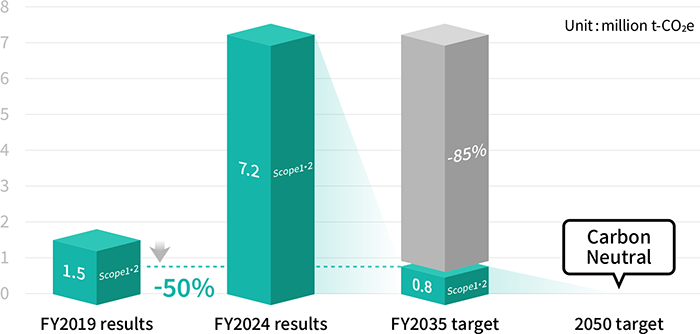
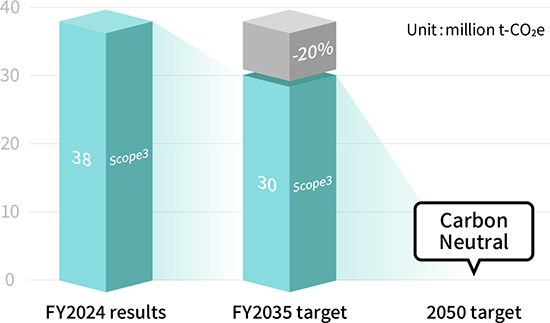
For Scope 1, 2, and 3 (Categories 13 and 15), which constitute the scope subject to carbon neutrality, we have set FY2024 as the base year and aim to achieve carbon neutrality in 2050 as our long-term goal, with an interim reduction target of reducing total emissions by 30% or more from the base year by FY2035 (breakdown: 85% reduction in Scope 1 and 2; 20% reduction in Scope 3 (Categories 13 and 15)). Carbon neutrality in 2050 means reducing the Group’s GHG emissions and bringing residual emissions to net zero through internationally recognized methods such as carbon removal. The scope of carbon neutrality covers GHGs including not only CO2 but also methane, nitrous oxide, hydrofluorocarbons, perfluorocarbons, sulfur hexafluoride, and nitrogen trifluoride.
The objective of these targets is for the Group to play its role in actively contributing to realizing carbon neutrality in society as stipulated in the Paris Agreement and other relevant global consensus.
To achieve the emission reduction targets, we will continue steady reduction efforts tailored to the business environment of each site, including introducing energy-saving equipment, replacing equipment, and procuring renewable energy.
The Group’s climate-related targets are reviewed by the Board of Directors after submission to the Management Council. As metrics for monitoring the progress of the Group’s climate-related targets, the trajectories of Scope 1, 2, and 3 (Categories 13 and 15) emissions are set.
In working toward carbon neutrality in 2050, the thermal power generation business and the fossil fuel upstream business are priority areas in which the Group is advancing emission reductions, and we regard emissions from these two businesses as important information that conveys our investment and financing stance to stakeholders. Given that the new scope subject to carbon neutrality under the GHG Protocol cannot fully capture all emissions from these two businesses*, we continue to monitor and disclose the annual emissions from both businesses.
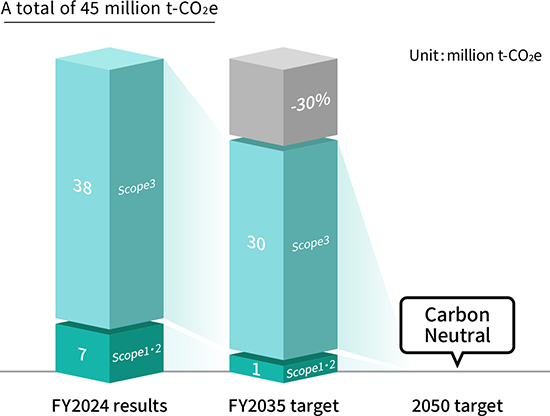
【Scope1・2】
Base year: 7.2 million t-CO2e in FY2024
Interim target: 0.8 million t-CO2e in FY2035 (85% reduction from the base year)
Long-term target: Carbon neutrality in 2050
【Scope 3 (Category 13 and 15)】
Base year: 38 million t-CO2e in FY2024
Interim target: 30 million t-CO2e in FY2035 (20% reduction from the base year)
Long-term target: Carbon neutrality in 2050
(Unit: Thousand t-CO2e)
| FY2024 (base year) |
FY2025 | Increase/ decrease |
Percentage of reduction from the base year |
||
|---|---|---|---|---|---|
| Scope1 | 6,666 | 6,799 | +133 | 2.0% | |
| Scope2 | 490 | 485 | △5 | △1.0% | |
| Scope3 | Category 13 | 20,052 | 18,707 | △1,345 | △6.7% |
| Category 15 | 17,778 | 16,305 | △1,473 | △8.3% | |
(Unit: Thousand t-CO2e)
| Index | FY2019(Base year) | FY2024 | FY2025 | Percentage of reduction from the base year | |
|---|---|---|---|---|---|
| Thermal power generation business*2 | 43,126 | 38,612 | 37,322 | △13.5% | |
| Of which, coal-fired power generation*2 | 34,452 | 32,429 | 31,722 | △7.9% | |
| Fossil fuel upstream business*3 | 15,808 | 11,564 | 11,320 | △28.4% | |
| Of which, thermal coal mine development project | 12,538 | 10,248 | 9,938 | △20.7% | |
The assets vulnerable to climate-related physical and transition risks that can reasonably be expected to affect the Group’s prospects, and their share of the Group’s total assets, are as follows. Assets vulnerable to physical risks cover the total assets corresponding to physical risks, and assets vulnerable to transition risks cover the non-current assets of businesses corresponding to transition risks. In addition, regarding assets vulnerable to transition risks, businesses for which the expected financial impact of transition risks that can reasonably be expected to affect the Group’s prospects is limited are excluded.
Also, the total assets aligned with climate-related opportunities that can reasonably be expected to affect the Group’s prospects, and their share of the Group’s total assets, are also as follows.
<As of March 31, 2026>
For the climate-related risks and opportunities that can reasonably be expected to affect the Group’s prospects, there is no material capital investment corresponding to them (as of March 31, 2026).
In addition, in order to have the Group’s sustainability management recognized by a wide range of stakeholders and to advance it from the viewpoint of financing, we have formulated the Sustainable Finance Framework. For details, please visit our website "Sustainable Finance" page.
(MW)
| As of March 31, 2026 | |
|---|---|
| Coal-fired power generation | 5,172 |
| Gas-fired power generation | 2,525 |
| Renewable energy*1 | 2,227 |
| Total | 9,927 |
From April 2023, we have been operating an internal carbon pricing (ICP) system to calculate carbon emission costs. We utilize analysis from the system to consider group-wide measures to create new business opportunities that contribute to realizing a carbon-neutral society and check potential impacts on future businesses for decisions on investment.
In the ICP system, we use the carbon price outlook under the NZE in the “World Energy Outlook 2024” published by the IEA to conduct scenario analyses based on the locations of new and existing projects.
<Carbon Prices in Our ICP>
(Unit: US dollars/t-CO2)
| 2035 | 2040 | 2050 | |
|---|---|---|---|
| Advanced economies with net zero emissions pledges | 180 | 205 | 250 |
| Emerging market and developing economies with net zero emissions pledges | 125 | 160 | 200 |
| Selected emerging market and developing economies (without net zero emissions pledges) | 50 | 85 | 180 |
| Other emerging market and developing economies | 25 | 35 | 55 |
Among power stations sourced by renewables such as solar, wind, biomass and geothermal energies, solar (photovoltaic) power plants generate the greatest amount of electricity in Japan. So called "mega-solar (far-over-MW photovoltaic)" power plants started to be constructed across the country in 2012, after the introduction of the Feed-in Tariff system.
In the 1990s, Sumitomo Corporation began importing polysilicon and other materials for Japanese photovoltaic panel manufacturers, while exporting their products to overseas markets. We subsequently started the development of mega-solar power plants in Europe and the United States, and from 2012, in Japan. Today, we own and operate mega-solar projects at six locations nationwide.
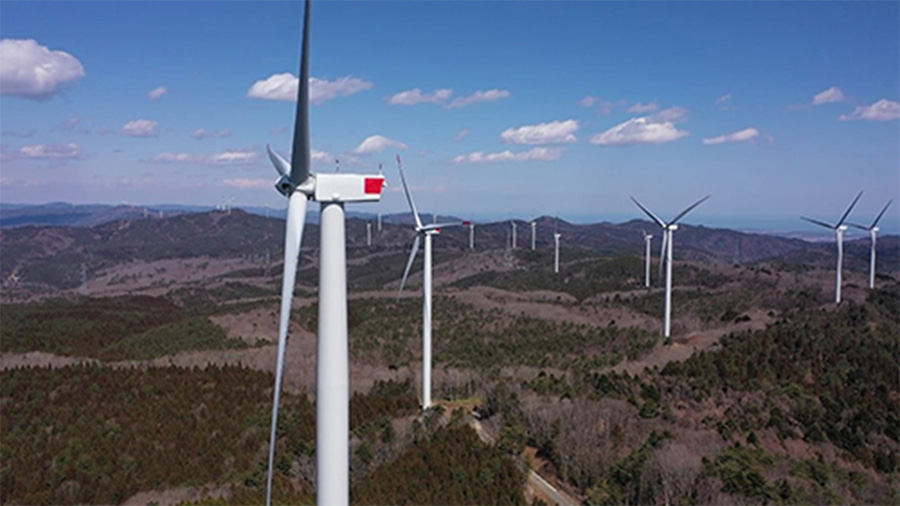
Construction of wind power plants came into full swing in Japan in the early 2000s, before mega-solar projects gathered momentum. Sumitomo Corporation started the commercial operation of its first wind power plant in 2004, when wind power generation had just begun to take off. We then launched several projects, including those in Kashima, Ibaraki Prefecture and Oga, Akita Prefecture, which are well into the operational stage today. In April 2025, a new onshore wind farm—among the largest in Japan—officially commenced commercial operations in the Abukuma region of Fukushima Prefecture.
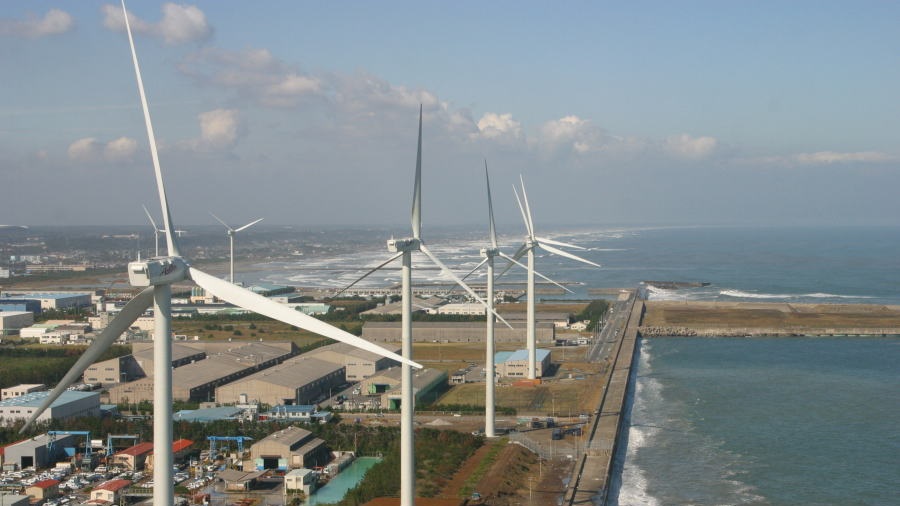
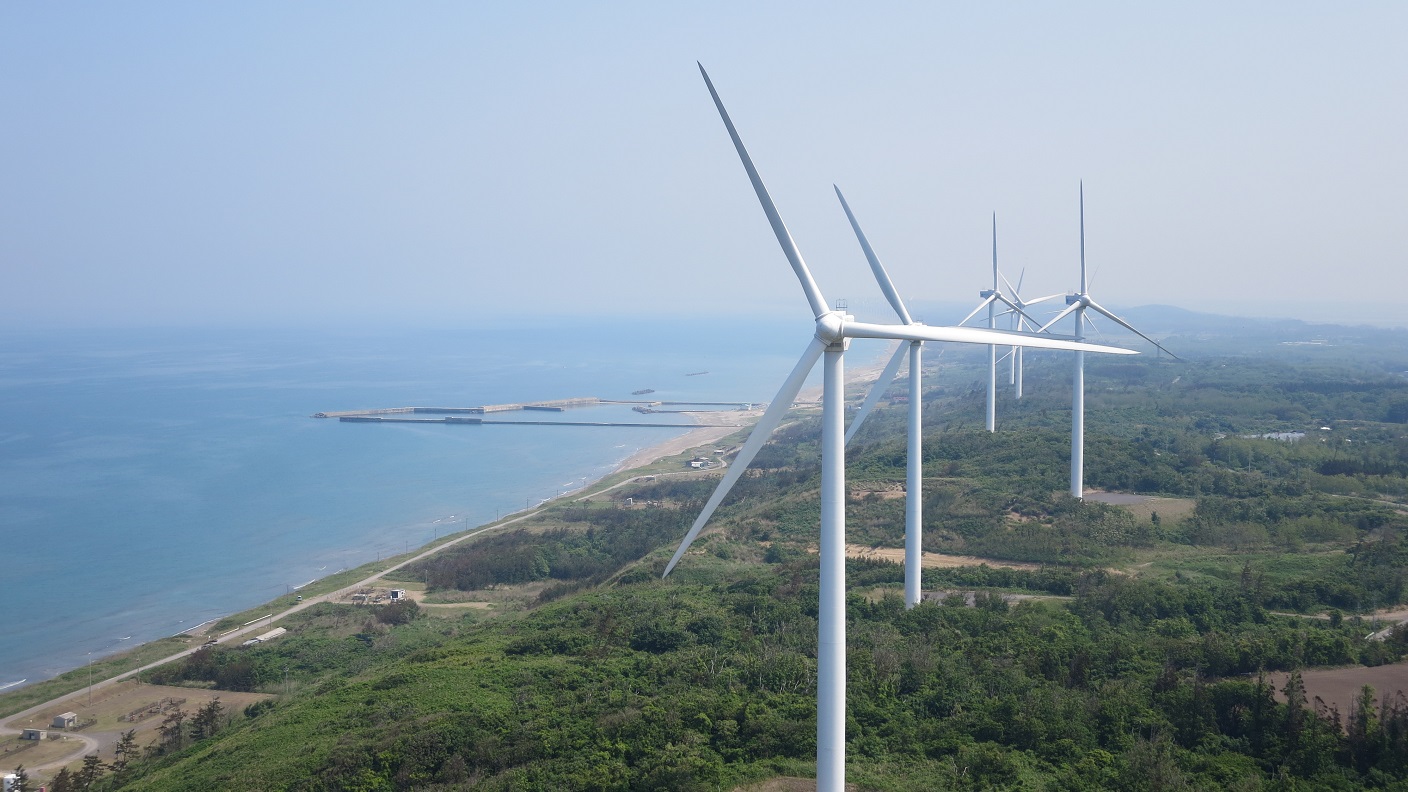
In April 2025, under the Fukushima Renewable Energy Promotion Vision and the Fukushima New Energy Society Concept, the Abukuma Wind Power Plants No.1, No.2, No.3, and No.4 (hereinafter collectively referred to as "the Abukuma wind farm"), which had been under construction since April 2022, officially commenced commercial operations under the Feed-In Premium (FIP / *1) system.
The Abukuma wind farm is one of Japan's largest onshore wind farm, with 46 wind turbines, each with a capacity of 3,200 kW, installed on ridgelines in the Abukuma region, spanning the municipalities of Tamura, Okuma, Namie and Katsurao in Fukushima Prefecture. The total generating capacity of the wind farm is approximately 147,000 kW, with an expected annual generation equivalent to the electricity consumption of approximately 120,000 households.
The renewable energy generated at the Abukuma wind farm will be supplied to multiple companies and municipalities with business operations in Fukushima Prefecture through Corporate Power Purchase Agreements (PPA / *2). A portion of the revenue from energy sales will be utilized for funding reconstruction projects in local municipalities where the wind farm is located through the Fukushima Prefecture Renewable Energy Reconstruction Promotion Council.
The Abukuma Wind Power Project will continue to contribute to Fukushima Prefecture’s reconstruction efforts through the stable operation of the wind farm and its returns to the local community. Fukushima Prefecture aims to establish its position as a leading region for renewable energy by generating an amount of renewable energy equivalent to more than 100% of its total energy demand, and this project plays a role in supporting that vision.
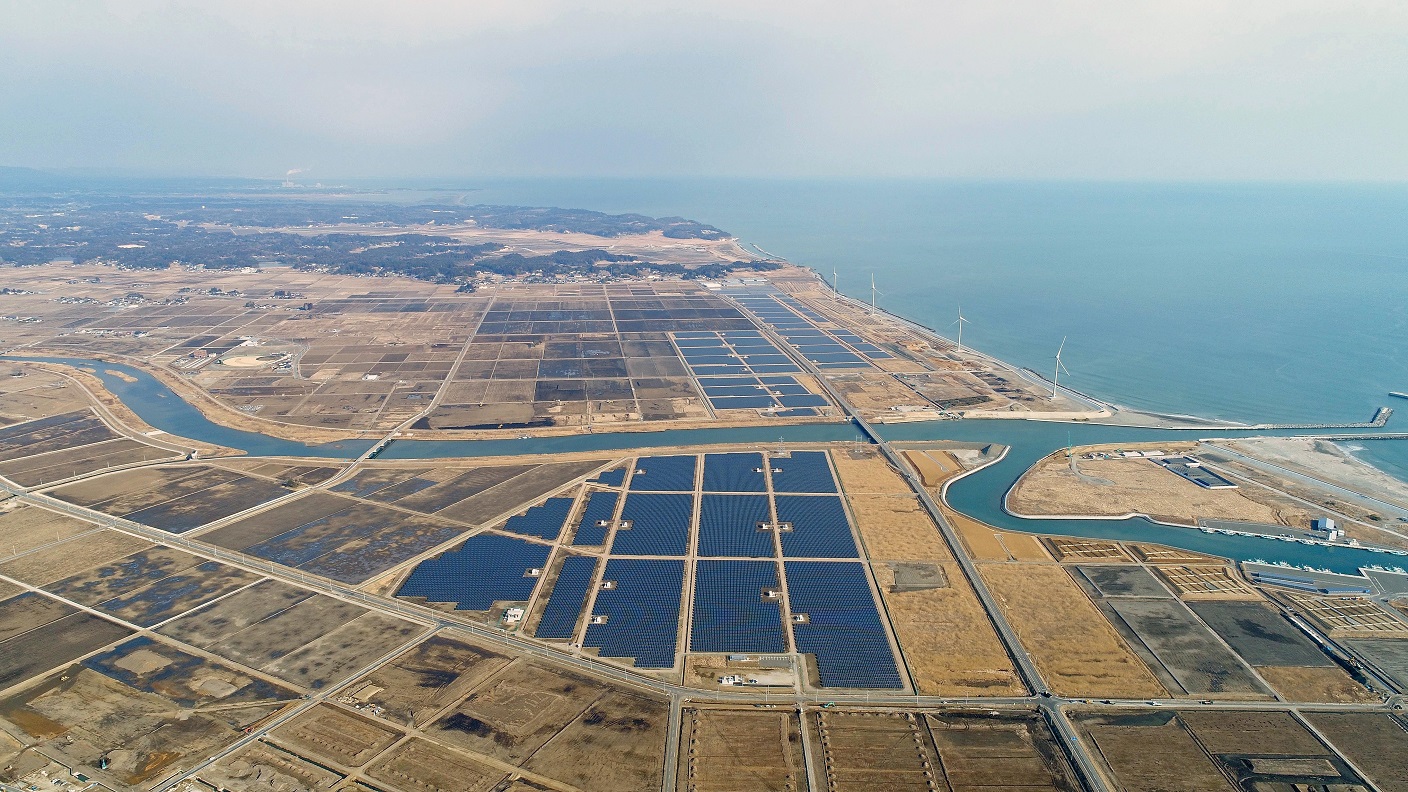
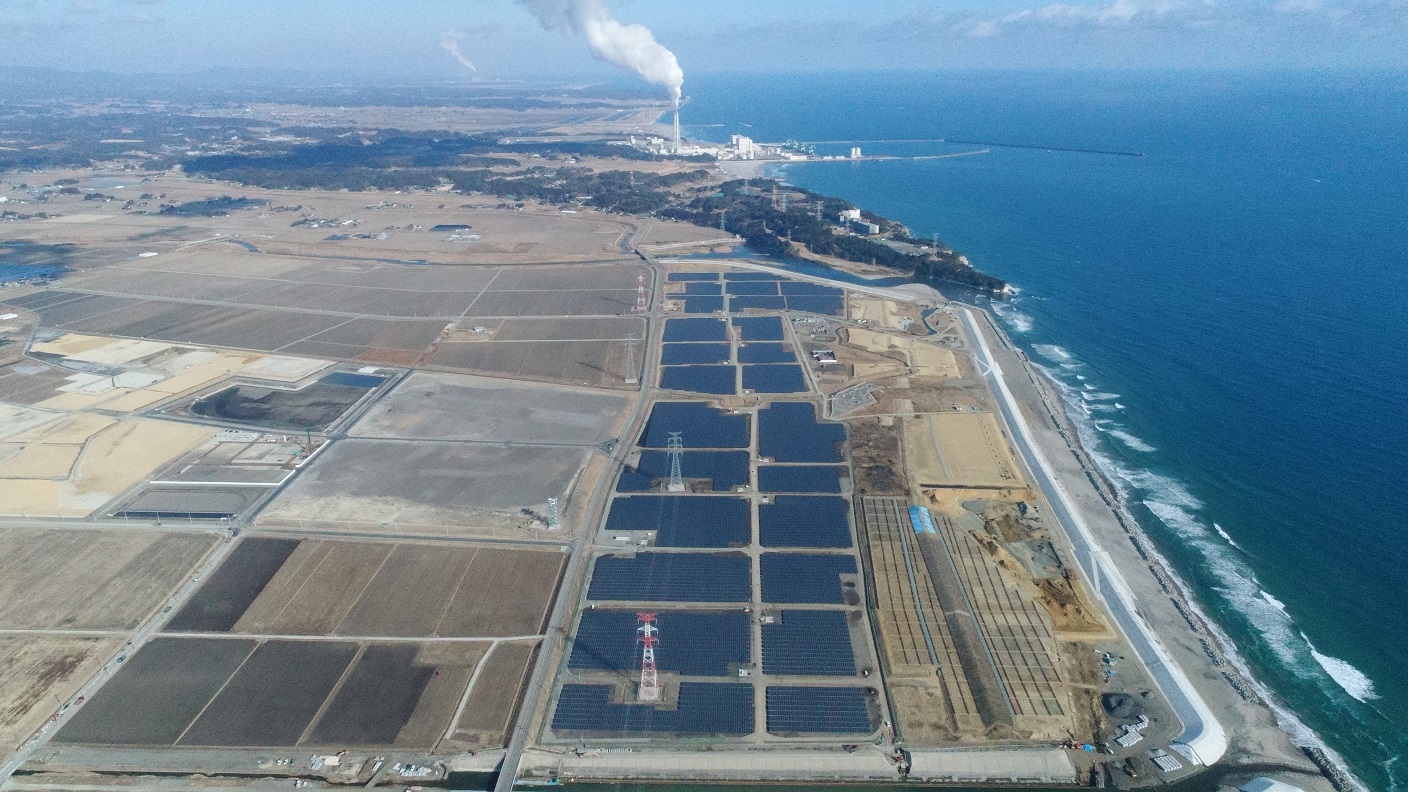
Our latest initiative in solar power generation is the development of a mega-solar power plant with a generation capacity of 92,000 KW in Minamisoma, Fukushima Prefecture, which suffered devastating damage from the Great East Japan Earthquake. In 2012, one year after the earthquake disaster, we began drawing up a plan to build a solar power plant with cooperation from the local municipality with the aim of making use of coastal land that subsided due to the tsunami. After overcoming numerous challenges, commercial operation commenced in March 2018 for the first phase of construction, and in December 2018 for the second phase of construction.
Fukushima Prefecture aims to expand its renewable energy power generation capacity to meet 100% of the prefecture's demand by around 2040. Installed on a vast plot of 150 ha land, which is 32 times the size of the Tokyo Dome stadium, the two solar power plants will not only contribute to achieving this target, but also stand as a symbol of restoration from the disaster for the regional people.
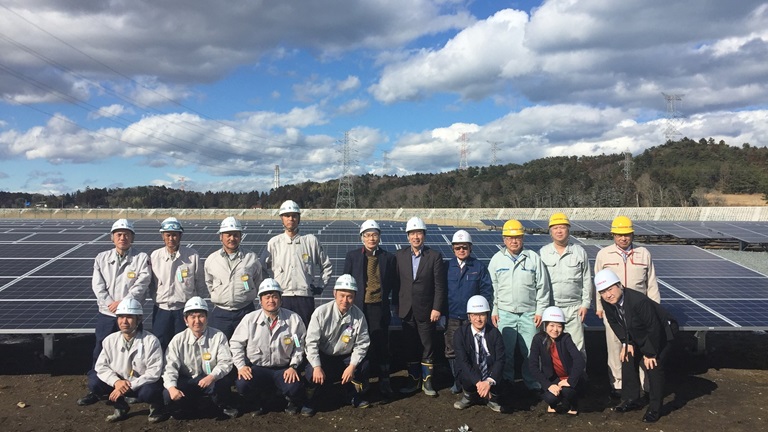
Sumitomo Corporation has the vision of operating its plants over the long term, even after the Feed-in Tariff period has ended, to continue supplying environmentally friendly and cost-competitive electricity to society. The prerequisite for fulfilling this vision is to build a relationship of trust with the local communities. The only way our facilities can sustain operations over decades to come is to be accepted and loved by the local people.
Solar and wind power generation is susceptible to weather conditions. As a means of compensating for this weakness and ensuring stable electricity supply, Sumitomo Corporation is looking to use the storage batteries in its renewable energy business in pursuit of optimal electricity management. Furthermore, we are seeking to supply the electricity continuously and stably to consumers, in cooperation with Summit Energy Corporation, a subsidiary engaged in electricity retail business, who own and operate large-scale biomass power plants within the Group.
The Japanese government has set the 2040 target for the proportion of renewable energy in the domestic energy consumption mix to up to 40~50%. The Sumitomo Corporaton Group meanwhile, has a medium-term goal of increasing its renewable energy power supply capacity to at least 3 GW in combined total by 2030 and, toward this end, is expanding the development of carbon-free energy projects.
Regarding offshore wind power generation in Japan, which has been attracting attention, we were appointed as the operator for the project off the coast of Enoshima island, Saikai City, Nagasaki Prefecture, in December 2023 in a tender for selecting offshore wind power operators based on the Act on Promoting Utilization of Sea Areas in Development of Power Generation Facilities Using Maritime Renewable Energy Resources implemented by the Ministry of Economy, Trade and Industry and the Ministry of Land, Infrastructure, Transport and Tourism. We are currently proceeding with various surveys and design work in preparation for the start of commercial operation in August 2029, but we are also implementing various fishery promotion measures and regional development measures, aiming to be a business that is integrated with the local community.
Drawing on our long years of operational experience in solar, wind and biomass power generation, we are confident that we can contribute to the development of Japan's renewable energy power generation industry and the realization of a sustainable society.
Geothermal power generation is a method used to generate electricity with a renewable energy source. The mechanism itself is simple: ground water is heated by deep underground magma near volcanoes, and the resulting steam turns the turbine of a generator that produces electricity. As it requires no fossil fuel consumption, geothermal power generation has a low environmental impact. Also, the cost of generating electricity is unaffected by fuel market fluctuations. Compared to other renewable energy sources such as solar and wind power, geothermal energy is undisturbed by climate conditions. Accordingly, this generation method can deliver electricity on a stable basis.
However, geothermal power generation entails some risks. It is unclear to know if enough hot water or steam (i.e. geothermal fluid) can be obtained for power generation until after a deep well has been drilled. In fact, some projects must be aborted as a result of drilling 2,000 to 3,000 meters in depth. Developing geothermal energy projects requires know-how of surface level surveys, ability to fund wells for drilling, ample time, and even a certain amount of luck.
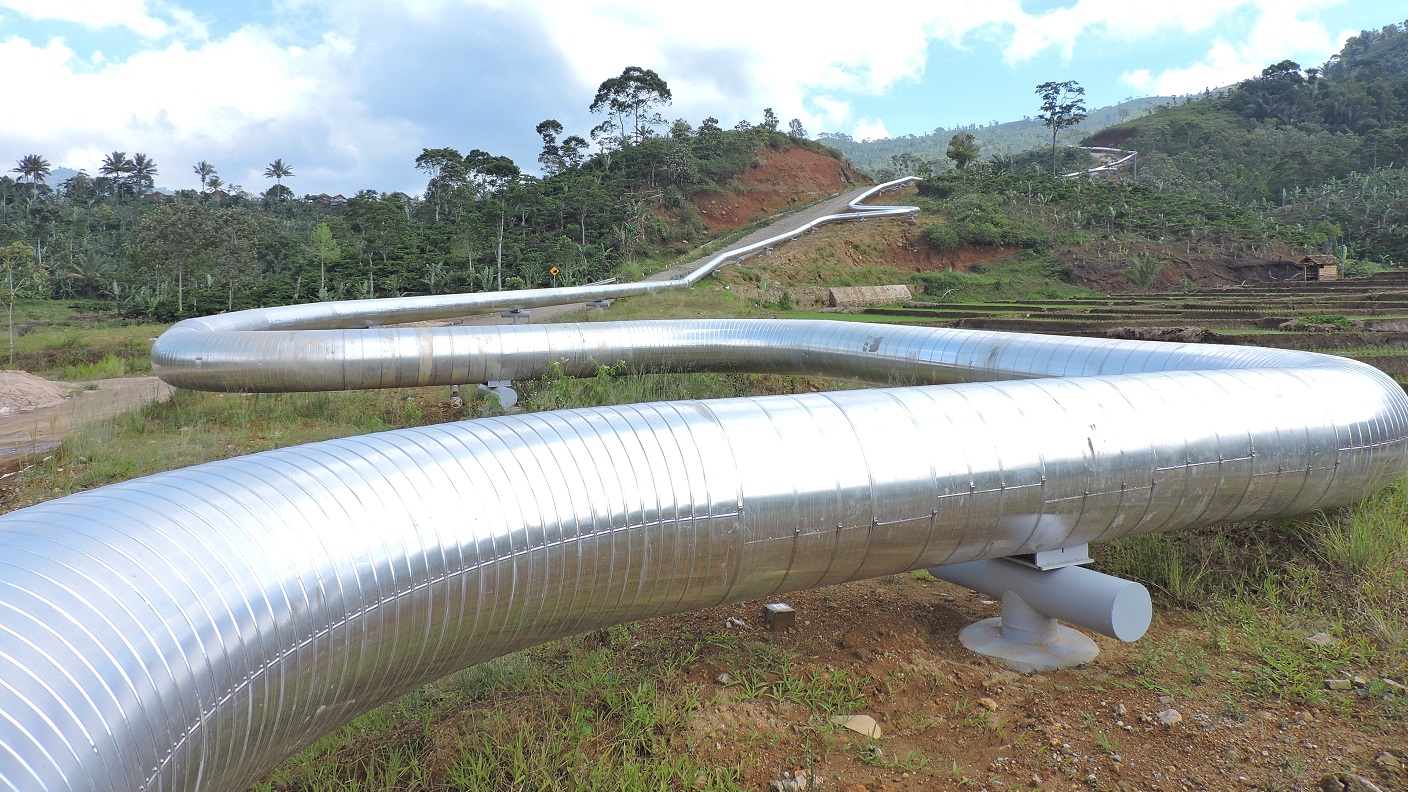
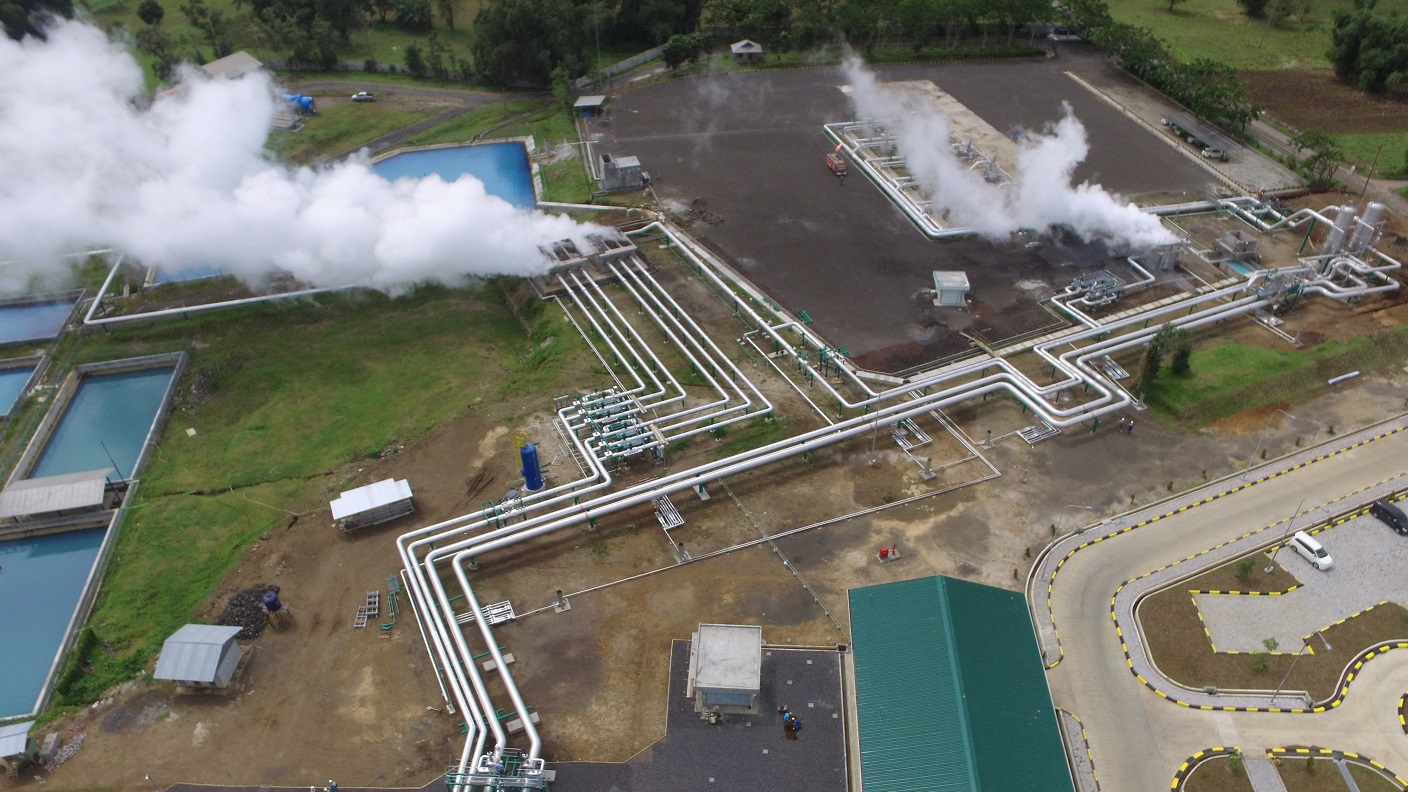
Business models for power generation infrastructure are generally grouped into two main categories: EPC and IPP. EPC refers to construction contracts where the Engineering, Procurement, and Construction of a power plant are contracted. Under EPC arrangements, the contract is typically fulfilled when the completed facility is delivered to the local government or company. IPP stands for Independent Power Producer, where the operator becomes the owner of the generating facility and sells electricity on an ongoing basis.
With a view to the diversification of power sources in the future, Sumitomo Corporation has kept a keen eye on geothermal power generation since the early days when these projects were becoming larger in scale and more practical, and began delivering related equipment in the 1970s. Indonesia has the second highest number of geothermal resources in the world. We began our work in geothermal power generation there in 1995, and won our first EPC contract for a geothermal power plant in 1997. To date, we have been involved in a total of 12 projects (17 units totaling approximately 900 megawatts of power generation capacity). This represents 40 percent of the total geothermal capacity in the country and is the highest among Japanese integrated trading and business investment companies.
Our success with numerous geothermal EPC projects has been built on the productive partnerships we have forged. Our partners include Fuji Electric Co., Ltd. the world's leading manufacturer of steam turbines for geothermal power stations, and an Indonesian company PT. Rekayasa Industri, which take charge of civil construction, installation and local procurement. Among our recent geothermal EPC projects are the Lahendong power station in north Sulawesi and the Ulubelu power station in south Sumatra.
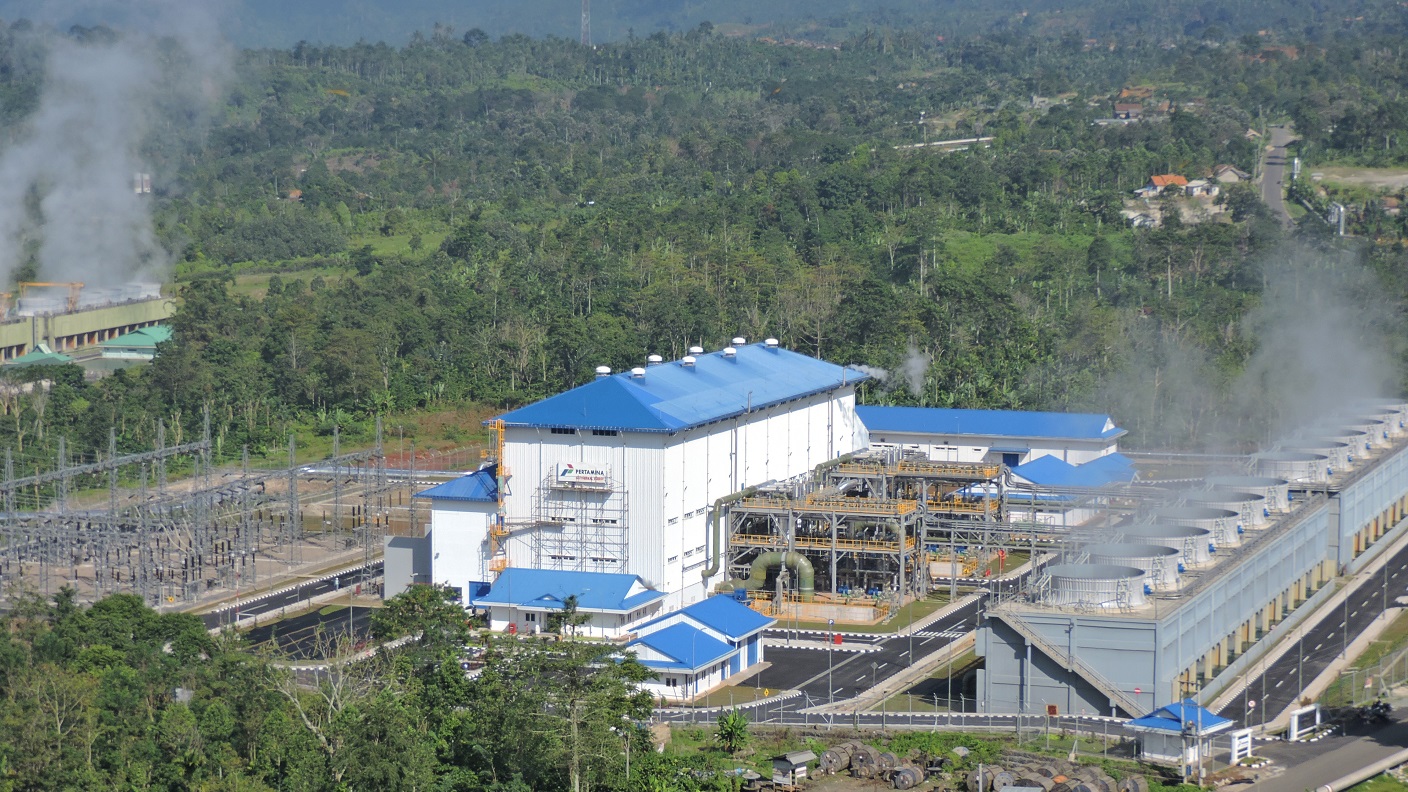
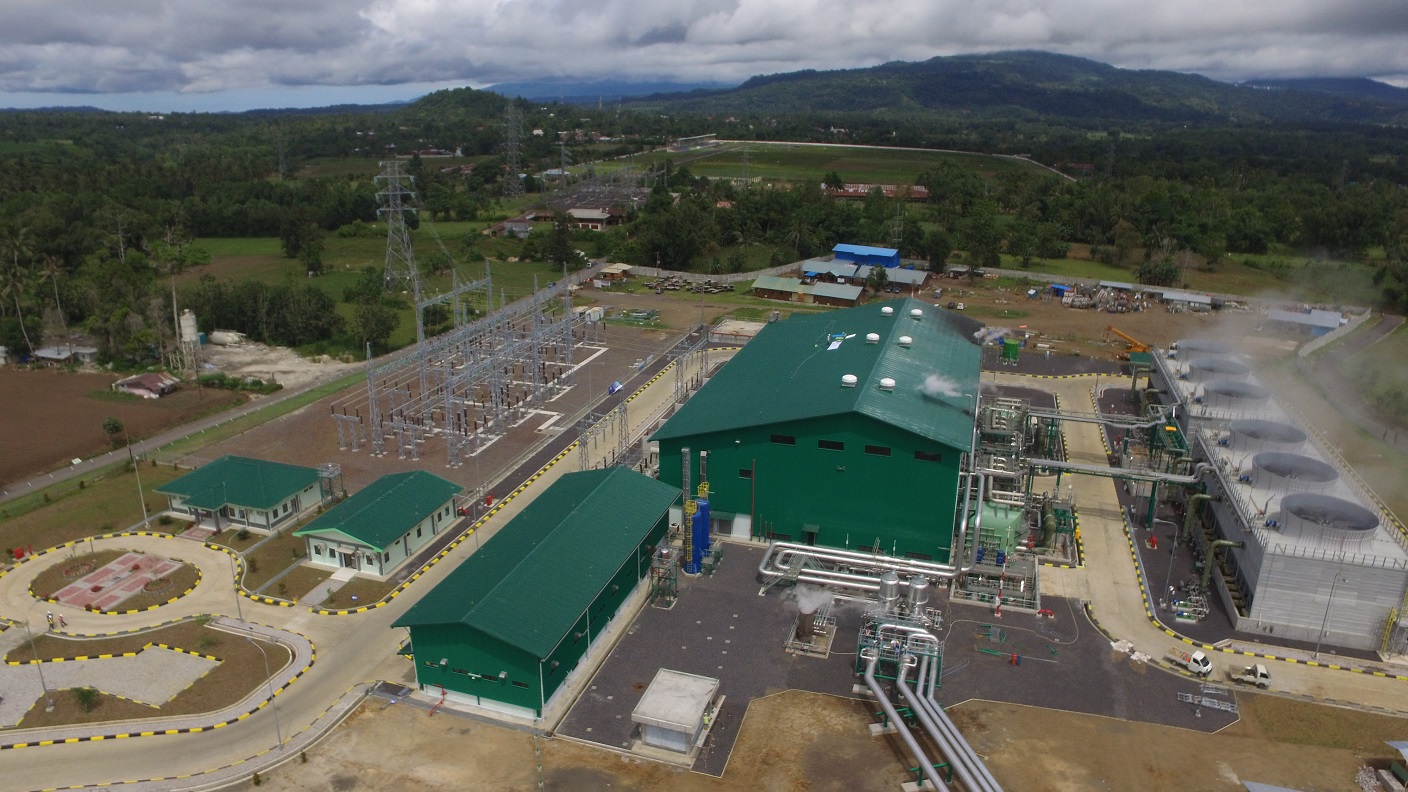
Our first geothermal IPP project in Indonesia was the Muara Laboh project, launched in west Sumatra in 2011.
Geothermal power stations are generally developed and built in untouched mountainous areas near volcanoes. Development of a geothermal project begins with construction works which consists of clearing and leveling the ground at the project site. Muara Laboh is located in a remote area, requiring four to five hours of overland travel from the nearest airport. In March 2012, the Project Company which Sumitomo Corporation along with its partners invests in entered into a long-term power purchase agreement of 30 years with the Indonesian state-owned electricity utility. After obtaining a Government Guarantee Letter from the Ministry of Finance of the Republic of Indonesia, the Project Company embarked on trial well drilling.
However, as a result of drilling exploration wells, the need to downscale power generation capacity became clear. We renegotiated with the Indonesian government and the Indonesian state-owned electricity utility regarding the terms and conditions of the project. It took nearly two years before all parties reached a unanimous agreement. The next step was to make financial arrangements for the actual power station construction. After five years of concluding the initial long-term power purchase agreement, we were able to achieve finance close and start the construction work in March 2017.
We were also contracted to provide EPC services for the construction of this plant. To achieve our goal of completing our first geothermal IPP project in Indonesia on time and contributing to the country's electricity supply, we not only leveraged our expertise as an operator that we have cultivated through other IPP projects, but also our extensive experience in geothermal EPC projects and the comprehensive strengths of our electric power infrastructure business as well. Finally, we were able to commence commercial operation in December 2019 and has since continued stable operation.
It was unprecedented for a Japanese company to be involved in the development of an Indonesian geothermal power project from the earliest stage, even prior to test drilling. Systemic difficulties made negotiations on project terms and conditions as well as financial arrangements a prolonged endeavor. Despite this obstacle, the successful completion of the power plant was achieved, helping us build a foothold for our next projects in Indonesia. Currently, based on the confirmation of surplus steam during the development of the Muara Laboh project, we are advancing a similarly sized expansion project adjacent to the existing power plant. After several years of negotiation with the Indonesian state-owned electricity company regarding the terms of the power purchase agreement, we were able to sign the amended power purchase agreement on December 2024, achieve finance close on April 2025 and start the construction work. The plant is scheduled to commence commercial operation in October 2027 and after the start of commercial operation, the electricity generated will be sold to the Indonesian state-owned electricity company for approximately 25 years until the end of 2052. Combined with the existing power plant, this project is expected to contribute to supplying electricity to the equivalent of approximately 900,000 households. In parallel, we are developing Rajabasa geothermal IPP project, another new initiative on Sumatra Island.
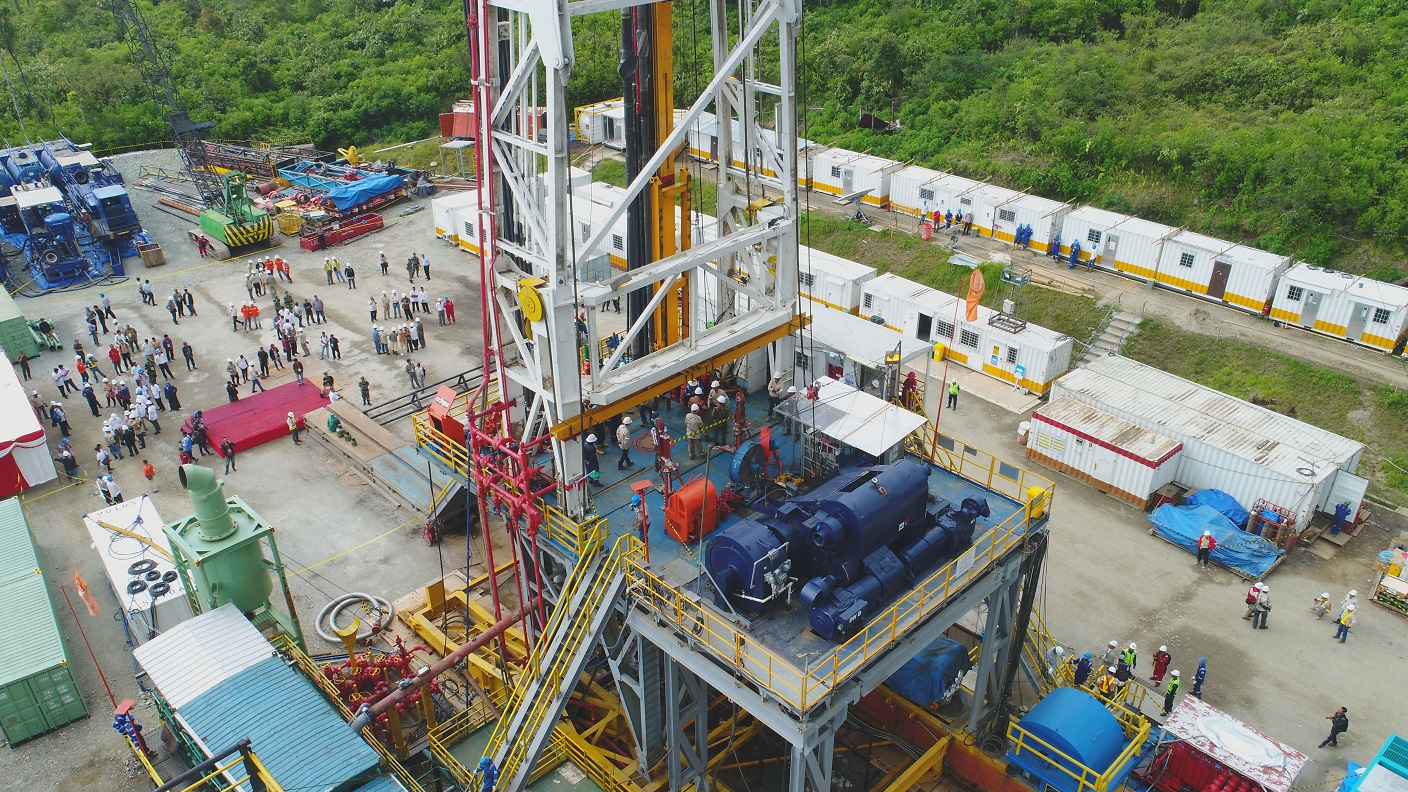
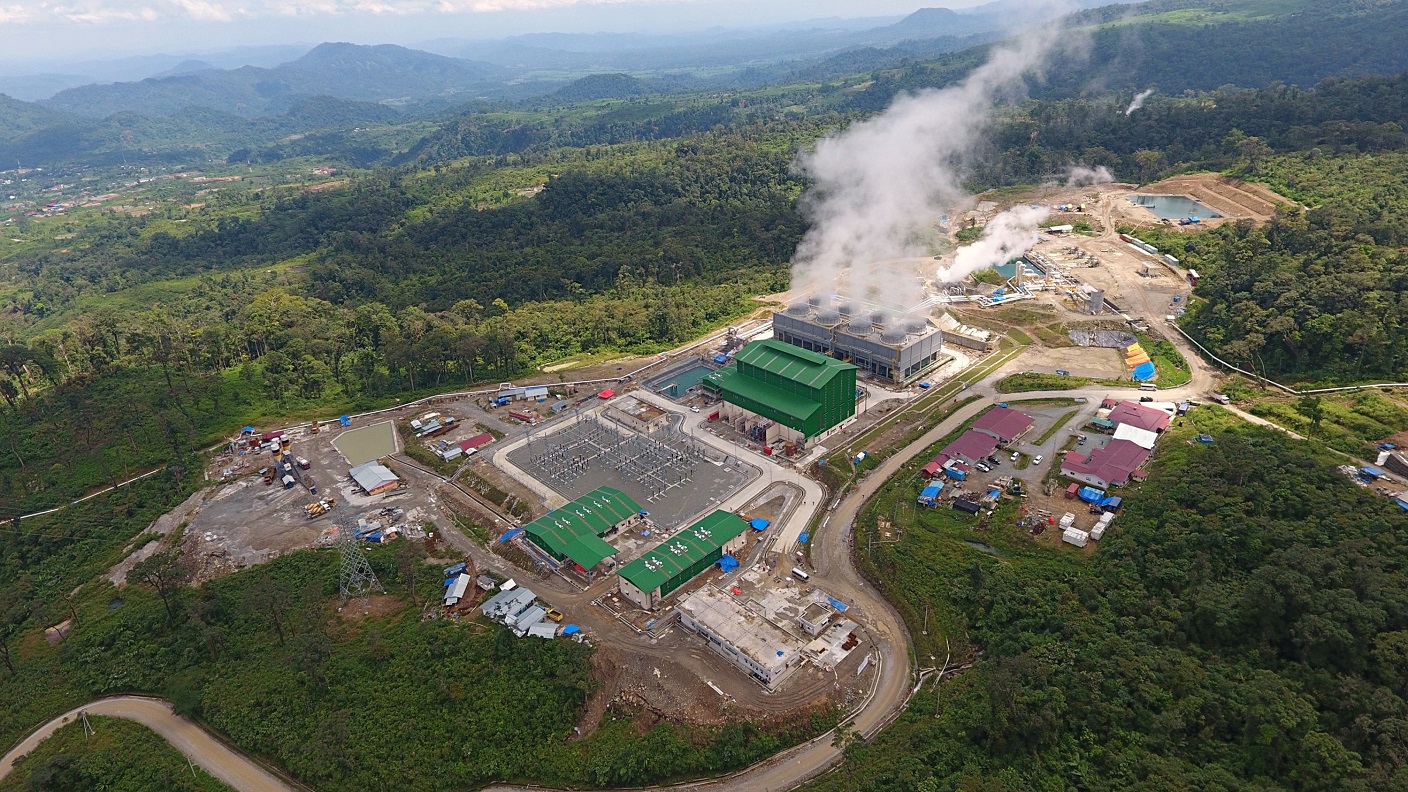
With the fourth largest population in the world at more than 270 million people, and an economy that continues to grow at around 5 percent per year, shifting to renewable energy and ensuring a stable supply of electricity have been national challenges for Indonesia. Geothermal power generation, which utilizes Indonesia's abundant geothermal resources, has been recognized as an effective means to simultaneously solve both of these issues, and the Indonesian government plans to increase its geothermal power generation capacity from the current 2,400 megawatts to 5,800 megawatts by 2030. The government is looking to Sumitomo Corporation, with its 20-plus years of experience in the construction of geothermal power plants and its experience in Muara Laboh geothermal IPP project, for support in this endeavor.
Geothermal power projects entail unique risks that other power sources do not. Building on our accumulated knowledge and expertise, we will contribute to the realization of a low-carbon society in Indonesia by managing those risks in cooperation with government agencies and financial institutions.
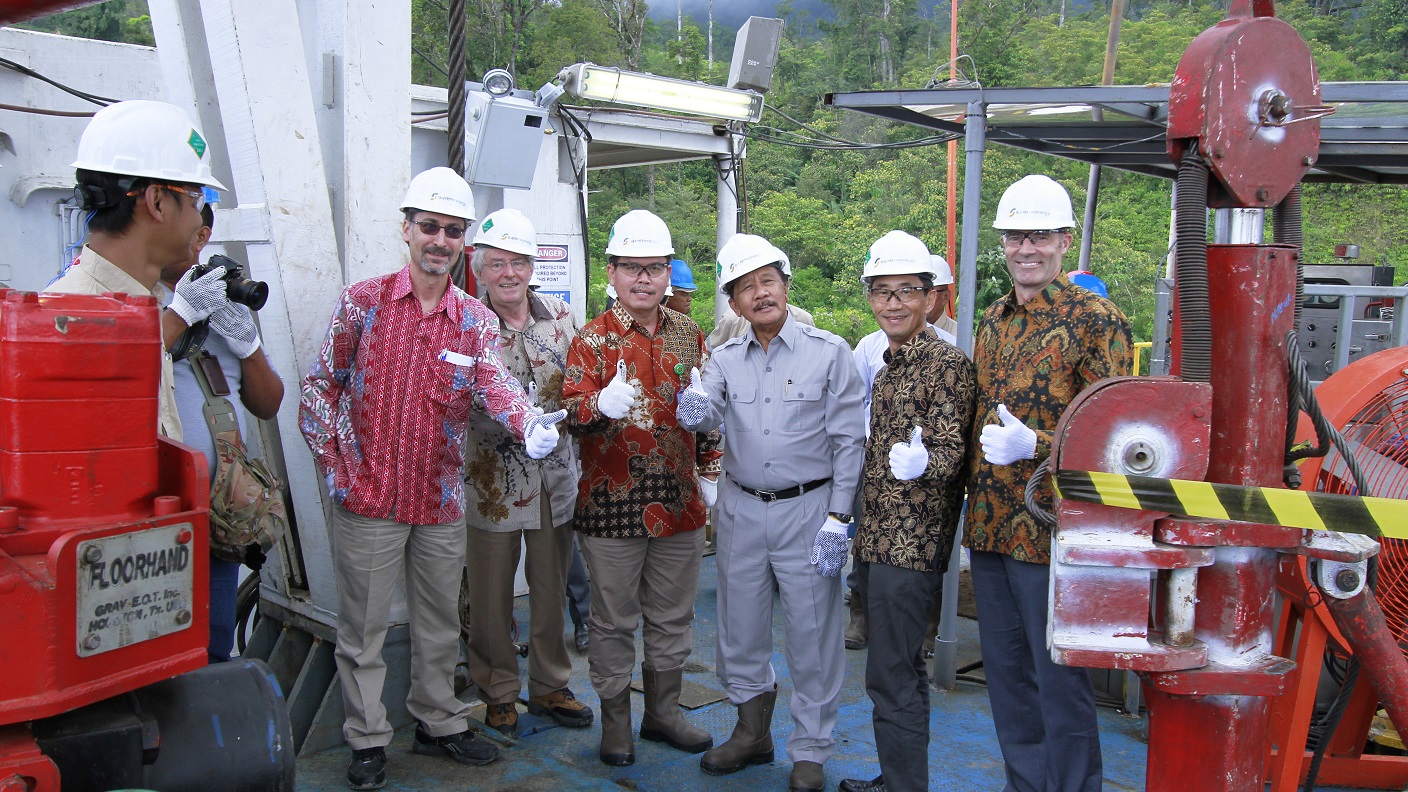
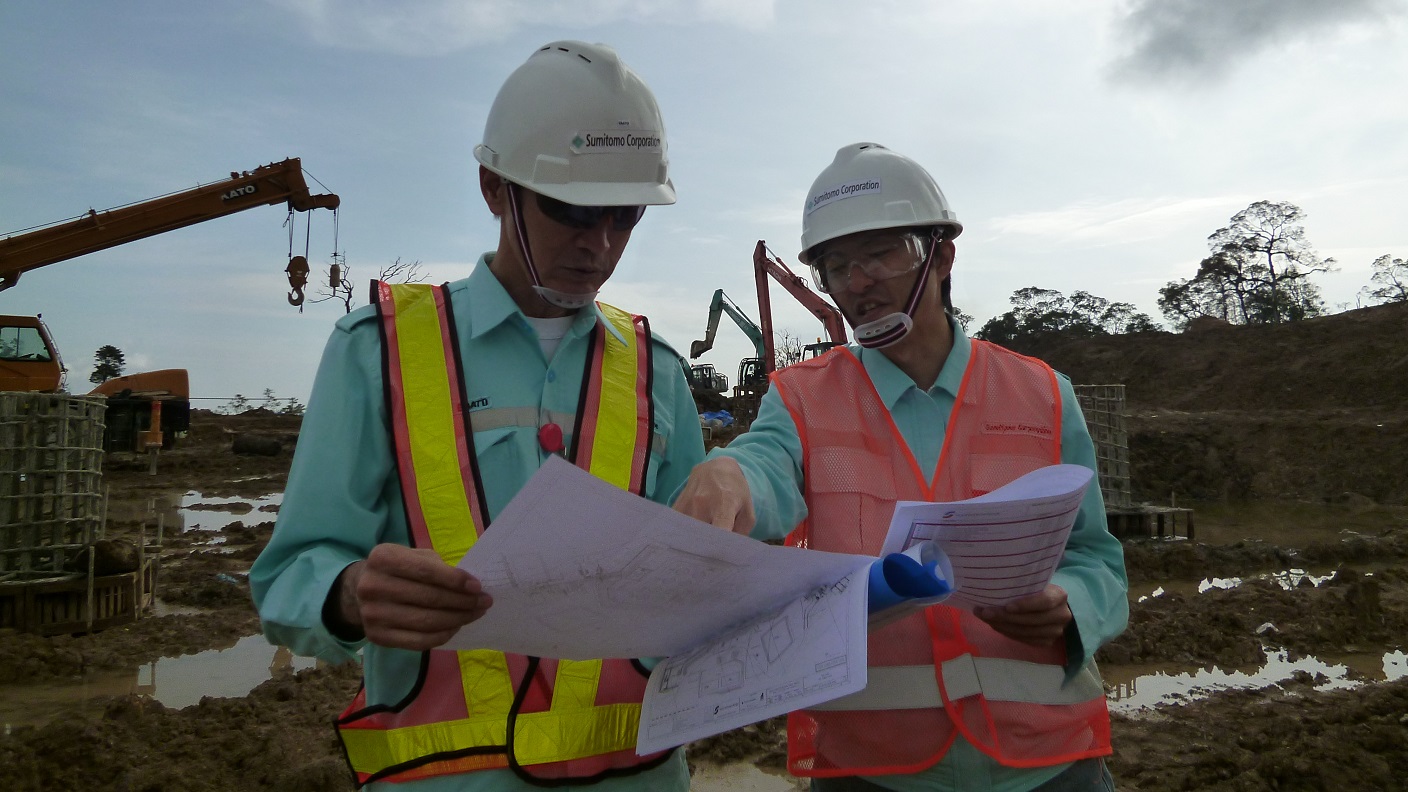
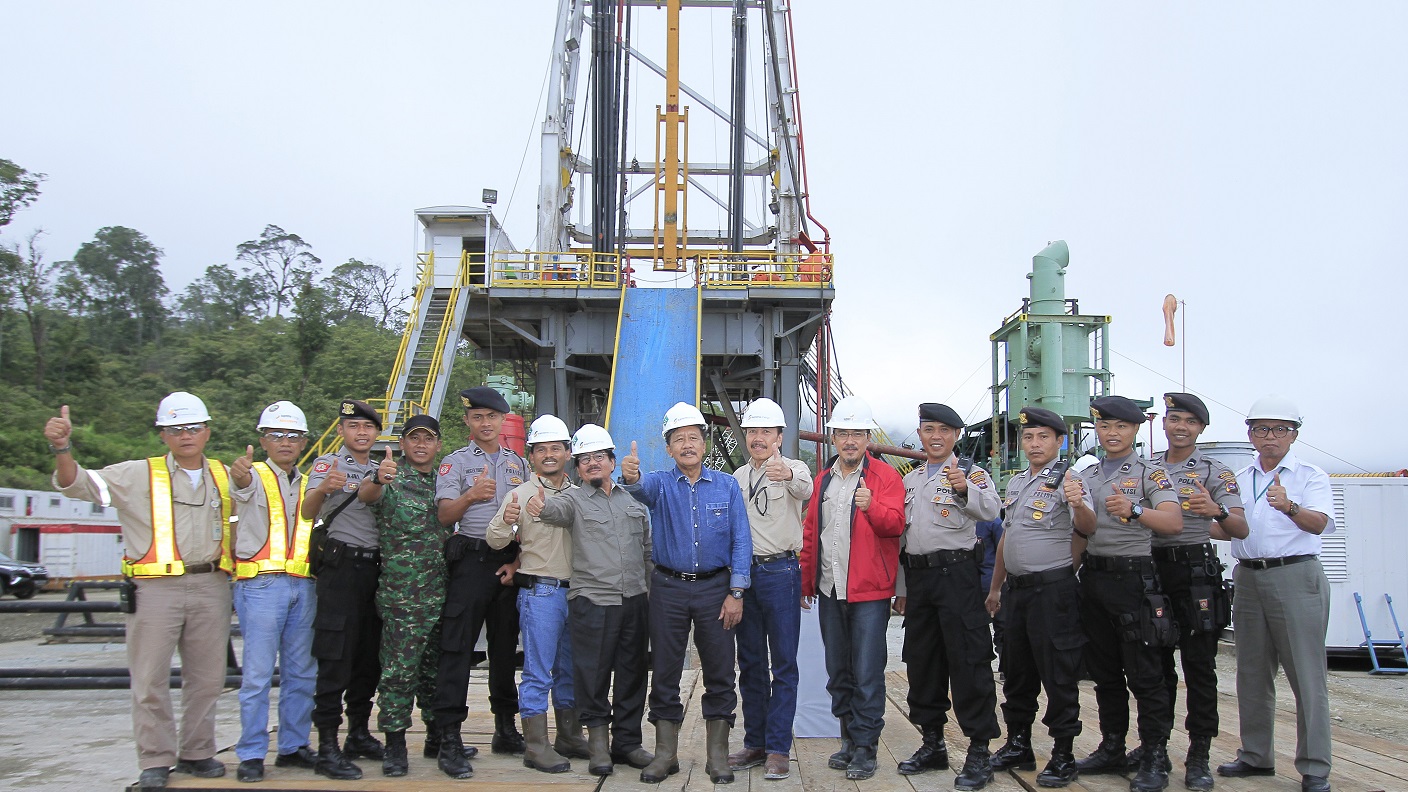
The European Union ("EU") aims to increase its use of renewable energy to at least 42.5% of the EU's total energy consumption by 2030. Under this circumstance, the development of offshore wind power generation projects is growing rapidly in Europe. This technology involves large turbines installed in the sea that harness the power of the wind to produce electricity. Wind farms are currently being constructed in earnest, mainly in the North Sea, which borders Norway, Denmark, Germany, the Netherlands, Belgium, France and the United Kingdom ("UK").
The greatest advantage of offshore wind power generation is the absence of physical obstacles to wind, such as mountains and buildings. This increases efficiency in energy conversion and facilitates output projection. The vast open spaces of the sea are also convenient for the transportation of turbine blades, a headache for onshore wind power projects situated on restrictive land sites. The North Sea is particularly suited to wind farms since shallow waters stretch out for over 40 kilometers off the coast.
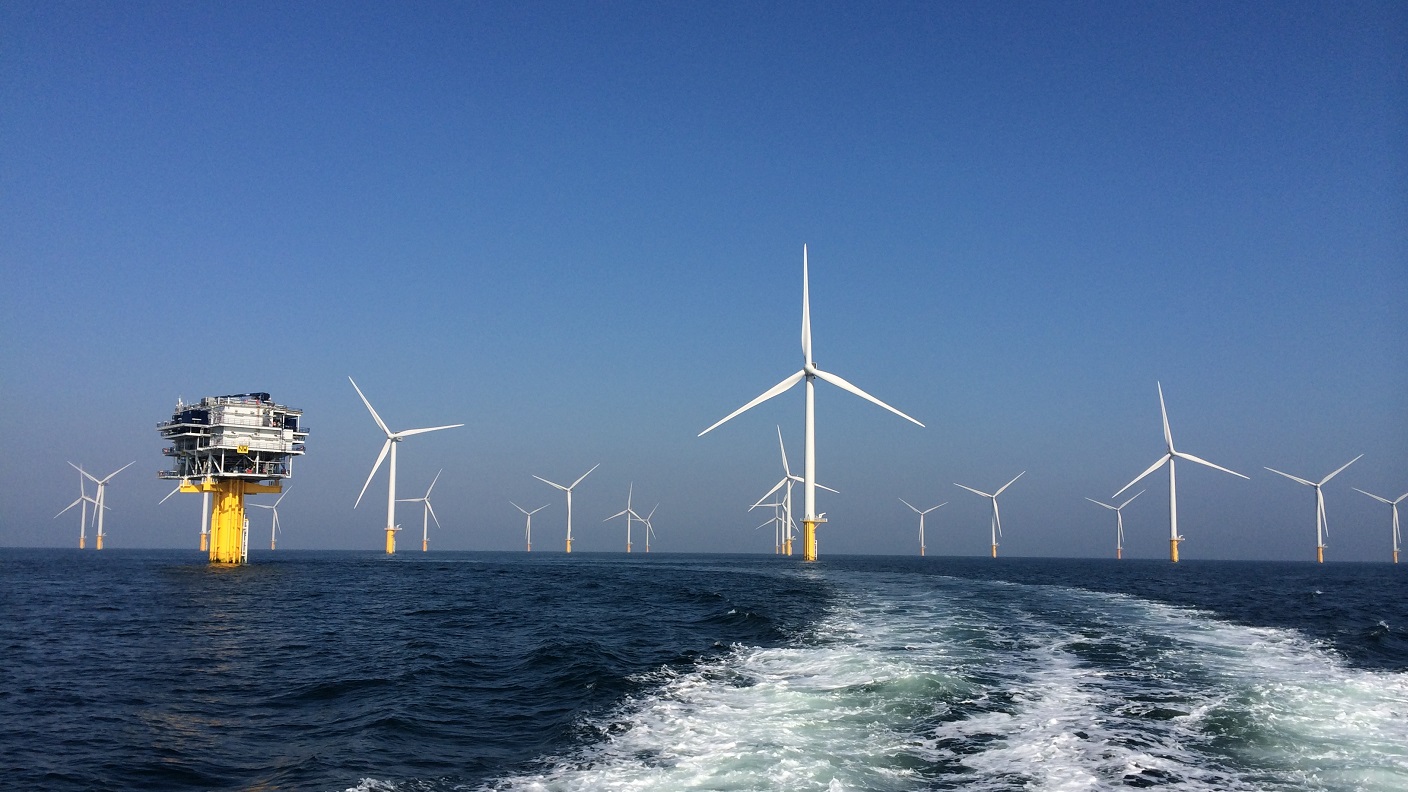
Sumitomo Corporation entered the offshore wind power business in 2014. We participated in Belwind, Northwind and Nobelwind, Northwester2 wind farm projects, then in operation, under construction or in development in Belgium.
Constructing and operating these huge wind turbines requires stable funding, management skills to see the project through, and operational expertise. Having already accumulated considerable related experience through building and running conventional power plants and participating in onshore wind power projects in North America, China and South Africa, Sumitomo Corporation has been able to bring about successful outcomes in the Belgian projects.
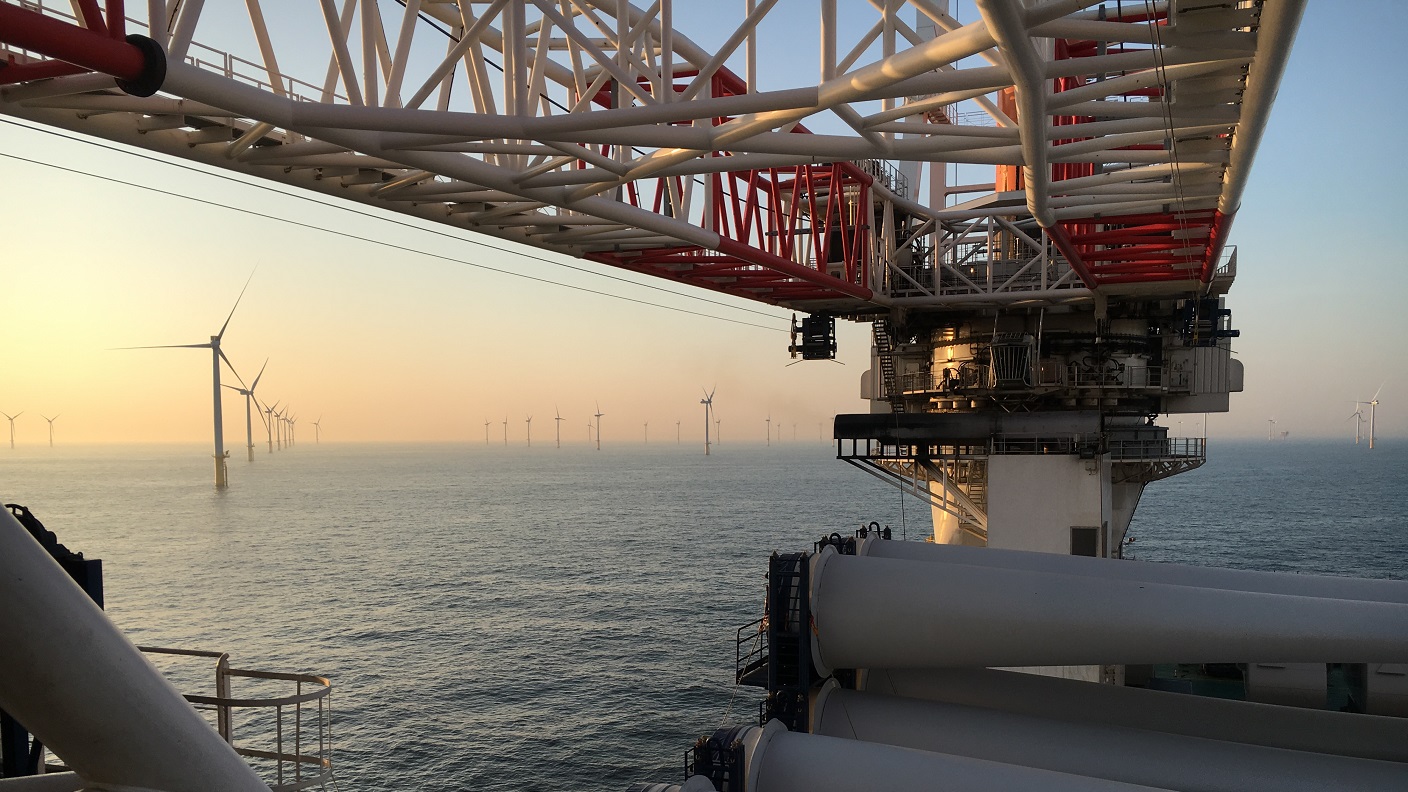
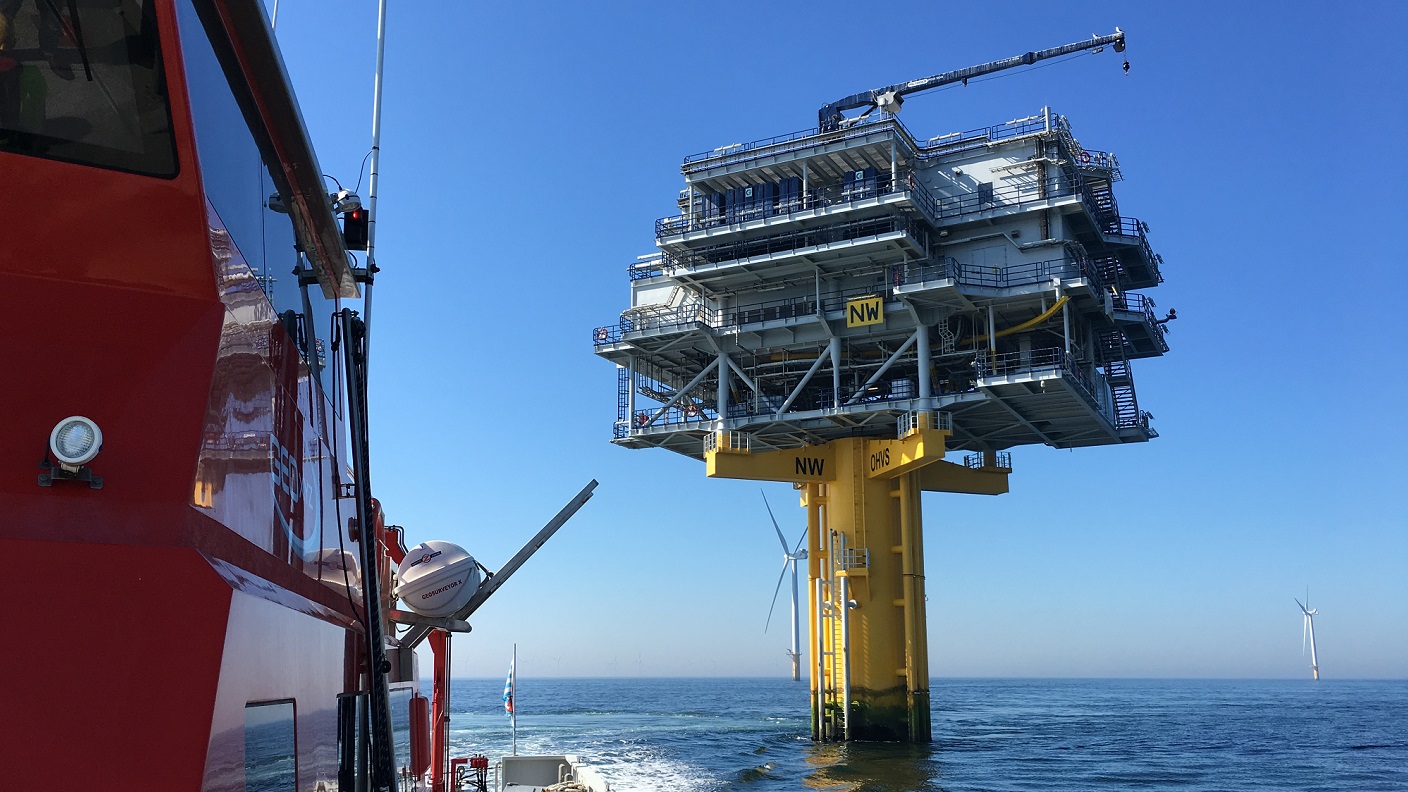
Sumitomo's European bases for its offshore wind power business are Dusseldorf in Germany (European hub), London in the UK, and Paris in France. We have been exploring new business possibilities, working locally as an IPP firmly anchored in each locale and utilizing our global network as an integrated trading and business investment company to gather information.
Sumitomo Corporation entered the offshore wind power business in 2014 for the first time and has been able to bring about successful outcomes. In fact, it was due to our steady local efforts, in addition to our highly acclaimed role in the Belgian projects, that we were able to successively take part in two British offshore wind farm projects, Galloper in 2016 and Race Bank in 2017. Wind farms of Race Bank and Galloper, far larger in scale than their Belgian projects, were completed in March and September 2018, respectively. Sumitomo Corporation's experience and know-how accumulated through the Belgian projects is utilized in the operation of these British wind farms. Following them, we have started the new project Five Estuaries, an extension of Galloper.
In 2018, we took part in the Le Tréport and Noirmoutier offshore wind projects in France, following our participation in Belgium and the UK. Le Tréport project is located in the English Channel about 15 kilometers off the coast of France and Noirmoutier project is located in the Bay of Biscay about 12 kilometers off the coast of France. We achieved financial close* for both projects in April 2023. Noirmoutier project has completed construction and commenced commercial operation in April 2026 while Le Treport project is currently under construction. The two projects have a total power generation capacity of around 1 gigawatt, enough to meet the consumption needs of 1.6 million people.
As evidenced here, the European offshore wind power market is expanding year by year. Our goal is to expand our business in this field by increasing our participation in projects in European countries, including for floating offshore wind turbine farms, an area for which growth is expected going forward. Sumitomo Corporation is moving in this direction, pursuing greater stability in power generation and higher cost competitiveness, so as to ensure continuity of power supply in Europe
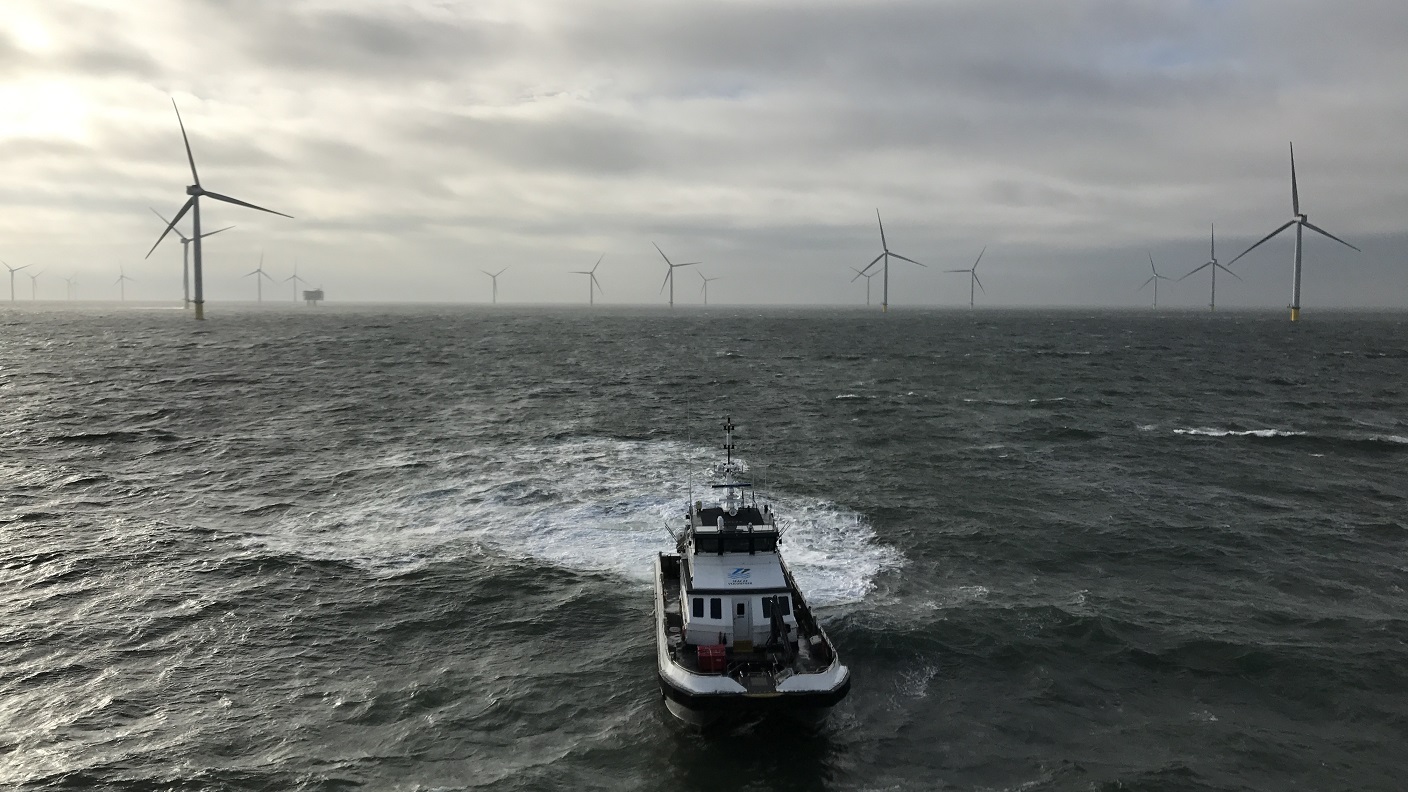
Outside Europe, Asia, Oceania, and North America are attracting global attention for their lofty potential in offshore wind power generation.
In Asia, Japan, Vietnam and other countries are whose who draw much attention, not only because of its abundant wind resources over spacious oceans but also thanks to the government's commitment to renewable energy. Sumitomo Corporation applies the expertise acquired through the European projects to initiatives in Japan, especially for the offshore wind project in the sea areas off the coast of Enoshima Island, Saikai Chity, Nagasaki Prefecture of which we were appointed by the government of Japan (the Ministry of Economy, Trade and Industry and the Ministry of Land, Infrastructure , Transport and Tourism) to design, build and operate as the operator.
In April 2018, Sumitomo Corporation integrated its conventional power and renewable energy business segments and established a global system to enable it to work on power generation projects in a seamless fashion. The company's objective in this area is to establish a robust energy business that contributes to society and preserves the global environment for future generations.
In 2019, Sumitomo Corporation, Sumitomo Mitsui Banking Corporation and the Development Bank of Japan established the first fund through Spring Infrastructure Capital (SIC), a fund management company jointly established by the three companies. The fund—the first fund in Japan to invest in offshore wind power projects overseas—has acquired the UK-based offshore wind farms as seed assets (assets for investment by the fund). In 2022, SIC established a second fund to acquire solar power generation projects in Japan as seed assets.
Through SIC, we will provide institutional investors with opportunities to invest in renewable energy assets both in Japan and overseas, and contribute to the development of global infrastructure centered on renewable energy.
To protect our planet while guaranteeing the day-to-day comfort and convenience that electricity provides, Sumitomo Corporation continues to vigorously promote its renewable energy business.
Wood represents a recyclable resource because trees can be systematically planted, grown and harvested repeatedly. In addition, wood is one of our most familiar resources. Sumitomo Corporation started wood business by importing logs, lumber and veneer into Japan to support the high economic growth of the country. Since the 2000s, the Company has also expanded the business to include forest management, with a view to securing and utilizing forest resources in a more sustainable manner. We are also supplying wood products coming from the forests that we manage, targeting not only Japan's matured market, which does not have much room for remarkable growth, but also markets with high growth potential around the world.
Forests, which absorb and store CO2, can contribute to carbon neutrality across the globe through proper management and harvesting. Sumitomo Corporation also conducts sustainable forest management by practicing environment-friendly harvesting in the forests owned and managed by the Company. Looking ahead, we are committed to further expanding forest resources on a global scale while leveraging the expertise we have built in forest management.
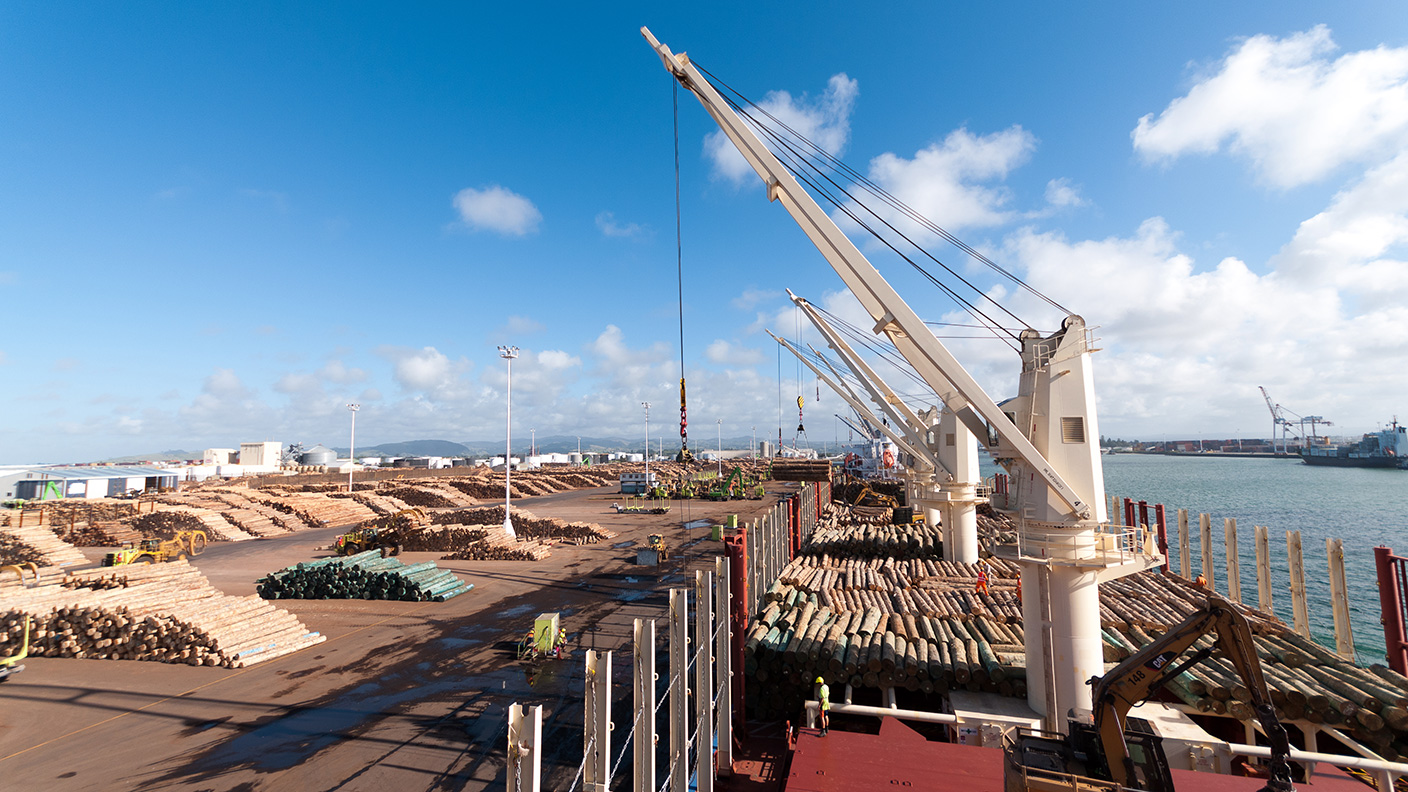
In March 2013, Sumitomo Corporation acquired forest in New Zealand and subsequently began to manage it through Summit Forests New Zealand. The forest extends over about 50,000 hectares on the North Island, where Radiata pine is grown and harvested to be exported to China and other Asian countries.
Forest management entails much labor, such as thinning out and pruning. There are also management risks to consider, including damage caused by fires and storms. Moreover, it might also be necessary to establish roads, ports and other infrastructure to transport harvested trees. Despite these challenges, Sumitomo Corporation is engaged in forest management in order to ensure a stable supply of wood on a long-term basis.
In Summit Forests New Zealand, trees are planted, grown and harvested in a cycle of 30 years to supply wood resources in an environment-friendly manner. For this forest, Sumitomo Corporation employs local inhabitants. They have long been engaged in and have vast knowledge of forestry. They are therefore efficiently sharing the work of planting, growing and harvesting trees in the plantation. On an annual basis, trees are hauled from the forest in the volume of about 600,000 m3 (equivalent to the volume of 900 25-meter pools). Nature is preserved in the forest, with wild horses running free.
Sumitomo Corporation is thus managing the forest in harmony with the local environment, instead of just trading wood from the forest, and this approach is highly evaluated by the local people. Also, we are applying advanced technologies to the industry, particularly to support harvesting operations. This involves employing drone and satellite photography systems to grasp the topographic features of plantation areas and to confirm the dimensions of harvesting areas.
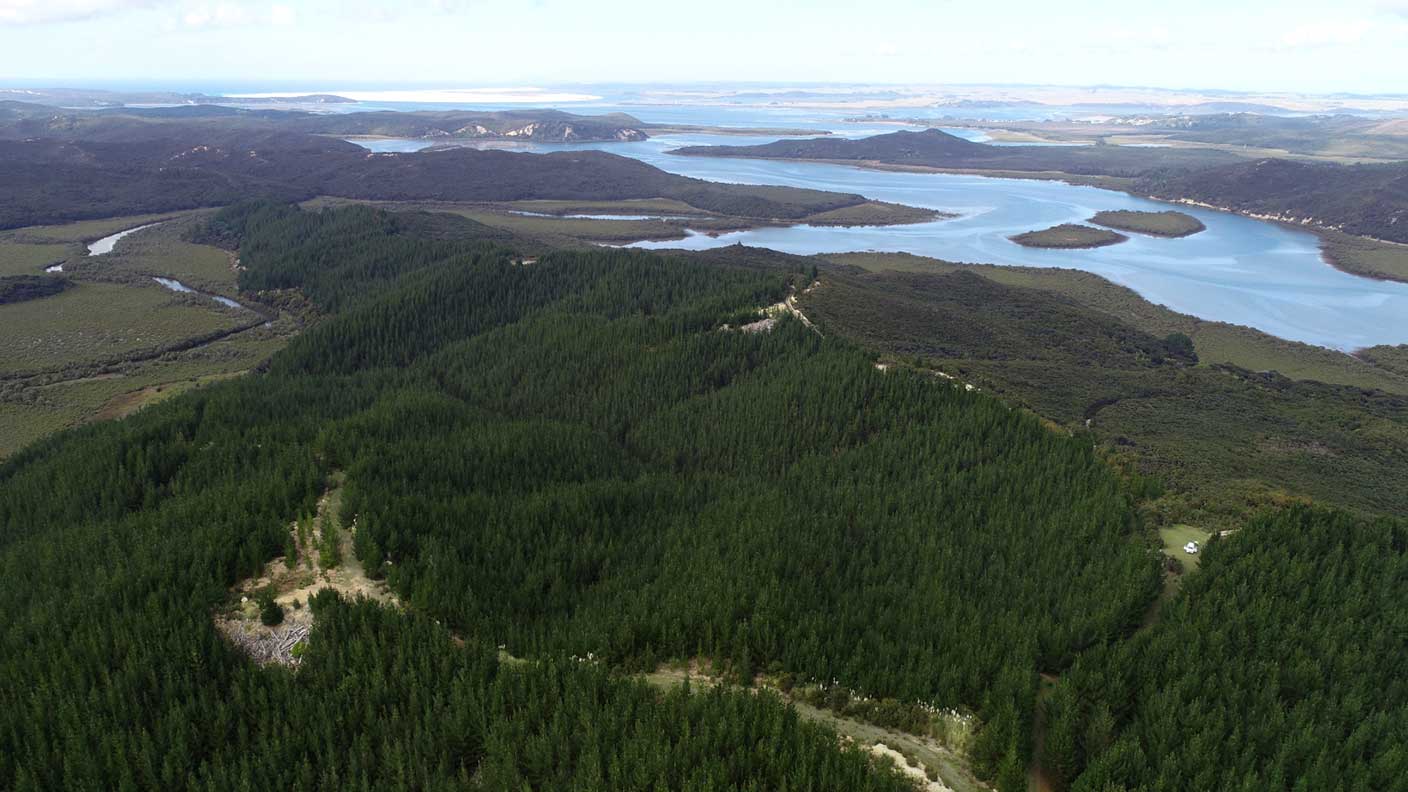
We have entered power generation business using renewable energy, which is expected to grow as a medium- to long-term energy source, contributing to mitigating climate change.
As of March 31, 2026
| Fuel | Power plant | Country | Generation Capacity (MW) |
|---|---|---|---|
| Solar power | Osaka Hikarinomori Project | Japan | 10.0 |
| Solar Power Saijo | Japan | 29.0 | |
| Solar Power Kitakyushu | Japan | 16.0 | |
| Solar Power Tomakomai | Japan | 15.0 | |
| Solar Power Minamisoma/Kashima | Japan | 59.9 | |
| Solar Power Minamisoma/Haramachi | Japan | 32.3 | |
| EVM/EVM2 | Spain | 14.0 | |
| Wind power | Oga Wind Power Plant | Japan | 28.8 |
| Summit Wind Power (Kashima) | Japan | 20.0 | |
| Abukuma Wind Power Plant | Japan | 147.2 | |
| Datang Sino-Japanese (Chifeng) New Energy | China | 50.0 | |
| Stanton Wind Energy | USA | 120.0 | |
| Cimarron Ⅱ Wind | USA | 131.1 | |
| Ironwood Wind | USA | 167.9 | |
| Amunet | Egypt | 500.0 | |
| Offshore wind power | Northwind | Belgium | 216.0 |
| Nobelwind | Belgium | 165.0 | |
| Northwester2 | Belgium | 219.0 | |
| Galloper | UK | 352.8 | |
| Woody biomass | Summit Handa Power | Japan | 75.0 |
| Summit Sakata Power | Japan | 50.0 | |
| Summit Myojo Power | Japan | 50.0 | |
| Sendai-ko Biomass Power | Japan | 112.0 | |
| Geothermal Power | Muara Laboh 1 | Indonesia | 85.0 |
| Muara Laboh 2 | Indonesia | 83.0 | |
| Hydraulic power | CBK | Philippines | 797.0 |
| Dak Di 1&2 | Vietnam | 48.0 |
In our real estate business, we have formulated and implemented basic policies related to environmental, social and governance (ESG) issues. As a part of this, from fiscal 2024, we have also begun allocating sustainable finance (※) to proceeds of office buildings and logistics facilities that have obtained real estate environmental certifications such as CASBEE and BELS.
In addition, Sumisho Realty Management Co., Ltd. (“SRM”), a group company of our company, has obtained real estate environmental certifications such as CASBEE, DBJ Green Building, LEED and BELS for its fund properties currently under management, including SOSiLA Logistics REIT, Inc. (“SLR”). Also, SLR has been awarded “5 Stars” in the 2025 GRESB Real Estate Assessment and the highest “A Level” for the GRESB Public Disclosure, which measures the quality of ESG disclosure.
As the first J-REIT to formulate a green finance framework since IPO, SLR has been promoting ESG-oriented asset management through green finance. SLR issued Green Bonds worth 1.6 billion yen in July 2022 and 3.0 billion yen in June 2023 with aims to strengthen the funding platform by expanding the ESG investor base, along with promoting ESG initiatives. Funds procured through Green Finance are used for the acquisition of existing or new assets (including scheduled acquisition) of Eligible Green Assets that satisfy any of the following eligible criteria, used for the renovation of Eligible Green Assets, or repayment and redemption of loans (including Green Loan) and Investment Corporation Bonds (including Green Bonds) required for these.
| Certifications | Property Name | Evaluation |
|---|---|---|
| CASBEE: 10 properties | SOSiLA Yokohama Kohoku | Real estate Rank A |
| SOSiLA Sagamihara | Real estate Rank A | |
| SOSiLA Kasukabe | Real estate Rank A | |
| SOSiLA Kawagoe | Real estate Rank A | |
| SOSiLA Nishiyodogawa I | Real estate Rank A | |
| SOSiLA NishiyodogawaⅡ | Real estate Rank A | |
| SOSiLA Ebina | Real estate Rank S | |
| SOSiLA Itabashi | Real estate Rank A | |
| SOSiLA Amagasaki | Real estate Rank S | |
| SOSiLA Yashio | Real estate Rank S | |
| BELS:10 properties | SOSiLA Yokohama Kohoku | ☆☆☆☆☆ |
| SOSiLA Sagamihara | ☆☆☆☆☆ | |
| SOSiLA Kasukabe | ☆☆☆☆☆ | |
| SOSiLA Kawagoe | ☆☆☆☆☆ | |
| SOSiLA Nishiyodogawa I | ☆☆☆☆☆ | |
| SOSiLA Ebina | ☆☆☆☆☆ | |
| SOSiLA NishiyodogawaⅡ | ☆☆☆☆☆ | |
| SOSiLA Itabashi | ☆☆☆☆☆ | |
| SOSiLA Amagasaki | ☆☆☆☆☆ | |
| SOSiLA Yashio | ☆☆☆☆☆ |
To achieve sustainability management, companies need to develop a Sustainability Transformation (SX) and green transformation (GX) strategy, followed by deployment of solutions, and continuous evaluation and improvement. To support our corporate clients to realize the sustainability management and to address the climate change problems, Sumitomo Corporation and ABeam Consulting have established a new joint-company called GX Concierge Inc. (hereinafter, “GXC”). GXC provides a wide range of sustainability consulting services, including: GHG emission calculations, information disclosure based on TCFD/TNFD recommendations, short-term and long-term energy price forecasts, and the formulation of renewable energy procurement strategies. GXC also offers a one-stop services by leveraging Sumitomo Corporation’s own GHG reduction solutions and DX (Digital Transformation) solutions to address the challenges of our clients identified through the consulting services. Furthermore, to meet the increasingly sophisticated needs of its customers, GXC is expanding its services, including non-financial information disclosure based on SSBJ standards, Materiality Update, and the support for building circular economy initiatives.
Given our deep involvement in the supply chains of a wide range of industries, Sumitomo Corporation group will continue to aim for the realization of a sustainable society through GXC, together with our suppliers and business partners.
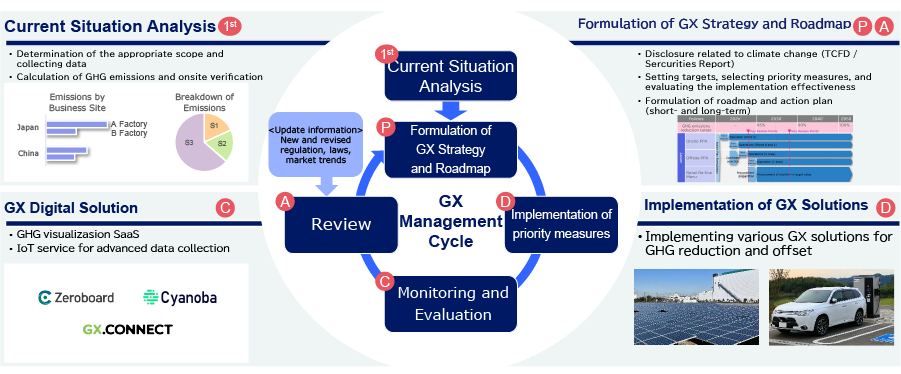
YAESUDORI FIL TERRASSE which we have been developing with a partner, was completed in January 2025. . This building obtained ZEB Ready certification (for net zero energy buildings) in a first for office buildings that we have developed. The ZEB Ready certification is given to non-residential buildings that are able to reduce primary energy consumption by 50% or more compared to base energy consumption through various energy-saving measures.
This office building achieved a BEI value of 0.48 (52% reduction compared to the standard) by adopting Low-E glass and light shelves on the exterior, high-efficiency air conditioning equipment, changes in room illumination, and the addition of lighting control equipment, thereby realizing an energy-saving building with a low environmental impact. Nine office buildings (including those currently under development), including YAESUDORI FIL TERACCE, have received ZEB certification, and we plan to obtain ZEB certification for properties we will develop in the future as well.
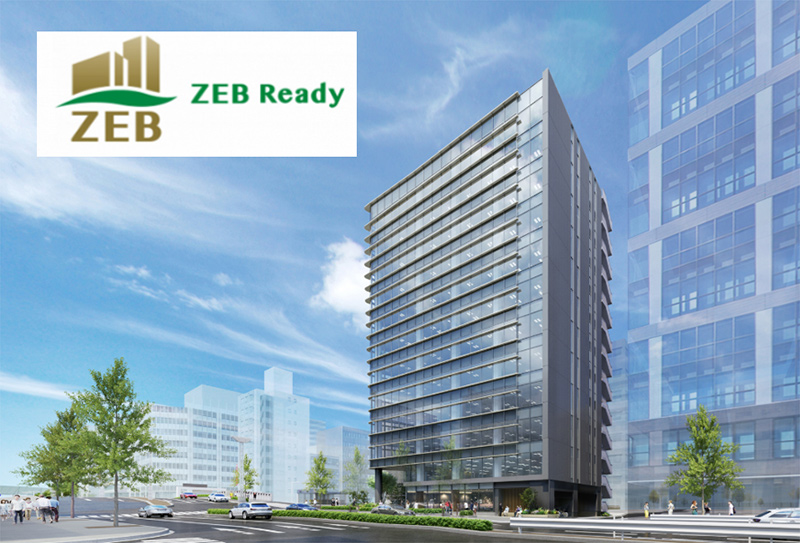
To promote efforts toward decarbonization, we have used GX Concierge to calculate and visualize GHG emissions at office buildings, retail facilities, residentials and logistics facilities developed and owned by us ,and consider GHG reduction scenarios to achieve carbon neutrality by 2050.
As a concrete initiative to reduce GHG emissions, we are also working to reduce Embodied Carbon (EC) by renovating used office buildings, and have completed construction of WORK VILLA MITOSHIRO, KYOBASHI, and HIRAKAWACHO. In particular, WORK VILLA MITOSHIRO is focusing on environmentally friendly businesses, such as reducing Operational Carbon (OC) through energy conservation measures that meet ZEB Oriented standards.
Additionally, the SOSiLA series have obtained environmental certification and are securing green electricity for facilities by installing solar panels on the rooftops in order to provide logistics facilities with high environmental performance to its tenant companies and SOSiLA Logistics REIT, Inc. investors.
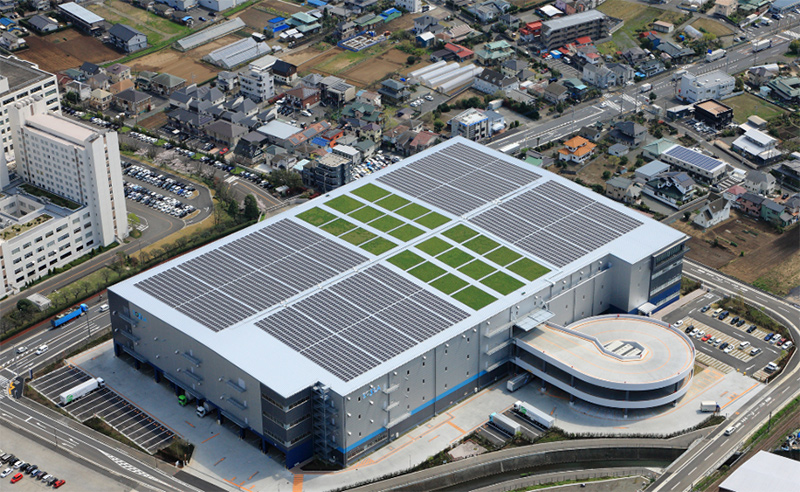
The SCSK Group plays a central role in the digital & AI business of Sumitomo Corporation Group and promotes sustainability management aimed at resolving social issues through its business while achieving sustainable growth together with society, and has identified material issues as priority challenges to be addressed.
Serving as an IT infrastructure platform supporting the accelerating digitalization of its customers, SCSK’s data centers also contribute to one of our material issues, “Global Environmental Contributions,” through initiatives to reduce the environmental impact in data center operations.
To address climate change, the SCSK Group is pursuing both "mitigation" measures to reduce greenhouse gas emissions, such as CO2, and "adaptation" measures to prepare for natural disasters associated with climate change.
In the data center business, the SCSK Group reduces environmental impact through various measures, including the adoption of energy-efficient IT equipment, the introduction of highly efficient cooling and air conditioning systems, and the provision of services such as server virtualization and cloud services.
SCSK’s data centers are certified as robust facilities resilient to natural disasters, ensuring business continuity for customers who utilize the data centers and contributing to the strengthening of resilience. The SCSK Group also supports customers' business continuity by, for example, preparing some of the rooms in the facility for customers to use as a disaster recovery room in the case of a disaster.
Going forward, the SCSK Group will continue to reduce greenhouse gas emissions through energy conservation and the use of renewable energy. Through environmentally friendly business activities and the creation of business opportunities that contribute to the environment, the SCSK Group will contribute to the realization of a decarbonized society and the development of a sustainable society.
Sumitomo Corporation is working with Nishi-Nippon Railroad Co., Ltd. (Nishitetsu) to develop a retrofitted EV bus business that converts existing diesel buses into electric vehicles. With reducing CO2 emissions being an important challenge for the bus industry as well, EV buses have become increasingly important in recent years. However, only limited numbers of EV buses have been put into operation so far due to the high price of the vehicles. Focusing on this challenge, we have successfully deployed the Retrofitted EV Bus scheme, together with Nishitetsu Auto Body Tech Co ltd, with practical cost using EV kits powered by RAC Electric vehicles Inc. which is the leading EV bus manufacturer in Taiwan.
This business is an initiative that contributes to various social issues, including development of local society and economy, the circular economy, and mitigation of climate change. By introducing and expanding use of these domestic retrofitted EV buses by Nishitetsu and other domestic bus businesses, we will contribute to decarbonization of the bus industry in Japan.
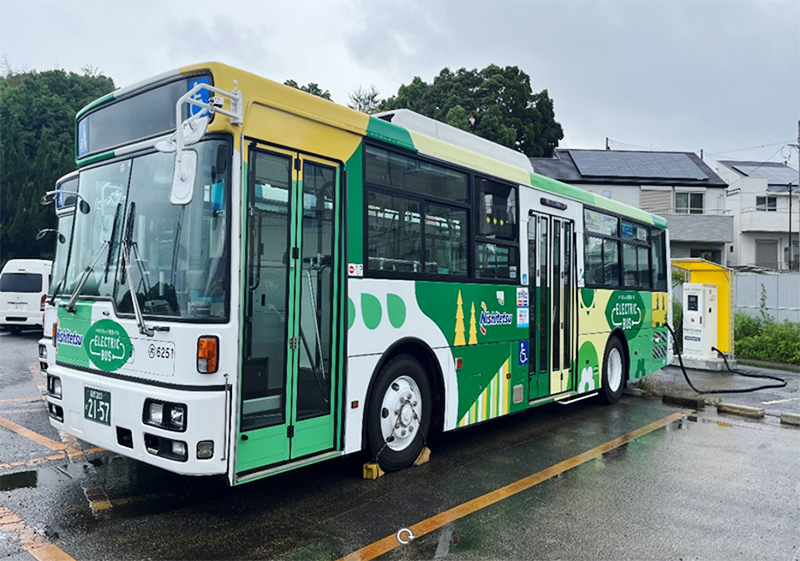
Through our Komatsu dealer business, which currently operates in more than 30 countries, we are contributing to the reduction of GHG emissions of mining companies. Specifically, in Canada and Finland, we are helping realize mining operations with reduced GHG emissions by partially electrifying processes through the use of trolley assist systems and improving operational efficiency through the introduction of Autonomous Haulage Systems (AHS). In addition, we have entered into a memorandum of understanding (MOU) with global engineering company ABB and are collaborating to provide one-stop solutions to customers, including support for the implementation of mining equipment equipped with technologies that contribute to GHG reduction at mining sites. Because the characteristics of mining sites vary depending on the region and site, it is necessary to provide optimal solutions tailored to the specific conditions of each site in order to achieve emissions reductions. Going forward, we will leverage our strong customer relationships cultivated through our dealer business to continue providing products and services that meet the needs of our customers and on-site operations.
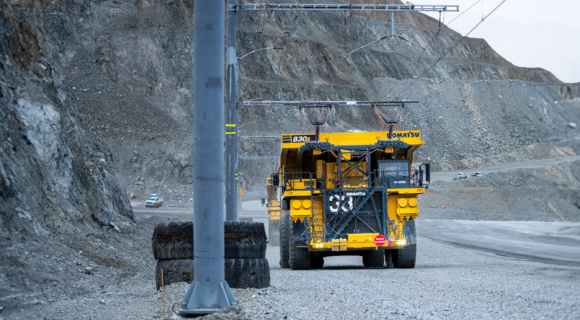
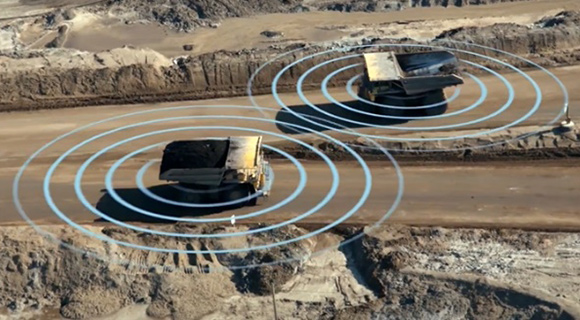
The Sumitomo Corporation Group recognizes the resolution of social challenges through its business activities as a key management priority and is committed to reducing environmental impact in the logistics field.
Given the diverse range of businesses operated by the Group, we strive to reduce environmental impact associated with transportation by optimizing the entire supply chain while taking into account the characteristics of each business. To this end, we are expanding the collection, visualization, and analysis of logistics data related to international trade, improving transportation efficiency and reducing energy consumption. At the same time, we promote continuous improvement through collaboration with our business partners and logistics providers.
In addition, we are working to create new logistics solutions—such as the utilization of next-generation transportation technologies and low-carbon energy to contribute to the realization of a sustainable society.
We are promoting the following initiatives to rationalize energy use in logistics and enhance transportation efficiency:
The Sumitomo Corporation Group positions logistics not merely as an operational function, but as a key capability that supports value creation across the entire supply chain.
Going forward, we will continue to work with partners within and outside the Group, leveraging data and technological innovation to achieve both environmental impact reduction and enhancement of business value, thereby contributing to the realization of sustainable logistics.