
Jump to section


View Sumitomo Corporation's Sustainability : Supply Chain Management
The Sumitomo Corporation Group has established the Sustainable Supply Chain Action Policy. Through the implementation of the policy, we are aiming to realize a sustainable society by working together with our suppliers and business partners to achieve responsible value chain management. The Company provides numerous opportunities to promote the understanding and entrenchment of this policy, in order to promote sustainable supply chain management. We share this policy with our suppliers and business partners and confirm their compliance as necessary. Also, in monitoring social and environmental risks in each business, we confirm the supply chain in accordance with Sustainable Supply Chain Action Policy, individual policies for specific commodities, as well as other laws and regulations.
Enacted in November 2009
Revised in November 2013
Revised in July 2026
Based on the “Sumitomo Business Philosophy” and our Management Principles, the Sumitomo Corporation Group regards contributing to the sustainable development of society through sound business activities as our fundamental mission. Our Group conducts business activities in accordance with international standards regarding human rights and other matters, including the “International Bill of Human Rights,” the International Labour Organization (ILO) “Declaration on Fundamental Principles and Rights at Work,” the United Nations “Guiding Principles on Business and Human Rights,” and the “Ten Principles of the UN Global Compact.”
As a general trading company conducting diverse business operations globally and maintaining diverse supply chains, in order to build sustainable supply chains together with our business partners and suppliers, our Group seeks their endorsement, understanding, and implementation of the matters set forth below. We will fulfill our social responsibilities by working with our business partners and suppliers to engage in dialogue and consultation with stakeholders for identifying and addressing issues within the relevant supply chains.
Furthermore, where adverse human rights, environmental, or other impacts, including conduct inconsistent with this Policy, are identified within our supply chains, we will request remediation by our business partners and suppliers through dialogue with them and in accordance with internationally recognized human rights and other relevant standards, and request that they develop and implement corrective action plans aimed at addressing such impacts as necessary. If, despite ongoing engagement, guidance, and support to the extent of our Group’s leverage, in accordance with internationally recognized human rights and other relevant standards, we determine that such impacts would not be sufficiently addressed, we will consider appropriate measures, including the temporary suspension or review of business transactions.
To realize a sustainable society by working together with our suppliers and business partners, Sumitomo Corporation has established Sustainable Supply Chain Action Policy. We have also established specific policies for natural resource-related commodities requiring sustainable procurement.
Forest Management Policy
Sourcing Policy for Forest Products
Palm oil is the most produced vegetable oil in the world which is used in a wide variety of products and closely related to our lives. Meanwhile, we, the Sumitomo Corporation Group recognize that palm oil comes with various social and environmental risks especially in the upstream supply chain, as its raw material, oil palm, may be linked to the deforestation of valuable forests, damage to biodiversity and impact on a local community due to plantation development, and forced and child labor in some production process.
Therefore, in order to fulfill social responsibility with relevant stakeholders based on Sustainable Supply Chain Action Policy, we strive to build a high transparent supply chain with our suppliers through being a member of RSPO* as a group.
Our consolidated subsidiaries SC Foods Co., Ltd., a trading company specializing in food products, and Summit Oil Mill Co., Ltd, an edible oil manufacturer, conduct a survey of the suppliers with an aim of confirming the existence of inherent problems in human rights in the supply chain. In addition, Summit Cosmetics Corporation, our consolidated subsidiary specializing in cosmetics-related products trade, also survey of the suppliers and request compliance with Sustainable Supply Chain Action Policy for Supply Chain Management which committed to the sustainable procurement of palm oil.
The Dodd-Frank Act, which was enacted in July 2010, requires US-listed companies to trace the country of origin of minerals used in their products with in their supply chains to determine whether or not "conflict minerals“* produced in and around the Democratic Republic of the Congo are included. The results must be reported annually to the U.S. Securities and Exchange Commission (SEC) and disclosed on their websites. Such reporting is not mandatory for the Sumitomo Corporation Group itself, as it is not listed in the U.S. However, in order to fulfill our corporate social responsibility in our business activities, we will closely monitor relevant trends and advance initiatives such as information sharing with suppliers, taking into account international challenges related to conflict minerals as well as requests from business partners.
EcoVadis provides a unique platform for assessing a company’s social and environmental sustainability performance. The following Sumitomo Corporation Group companies received EcoVadis Medals for their efforts.
Sumitomo Shoji Chemicals Co., Ltd. (hereinafter “Company”), which focuses on trading in the chemical and electronics sectors with extensive industrial involvement and numerous applications, ensures that, based on customer requests, its raw material suppliers confirm the "non-use of conflict minerals that fund armed groups" and "management of chemical substances contained in products." This is to verify that no environmental or human rights issues arise.
Additionally, the Company agrees to the green procurement systems of its customers, which aim to promote environmental conservation, and requires its raw material suppliers to also agree to these green procurement systems and comply with related environmental laws and regulations. The Company also verifies their compliance status.
The Company is a member of Sedex, a non-profit organization that provides a platform for companies to manage their supply chains ethically and sustainably, and has passed Sedex's audits related to environmental and human rights issues.
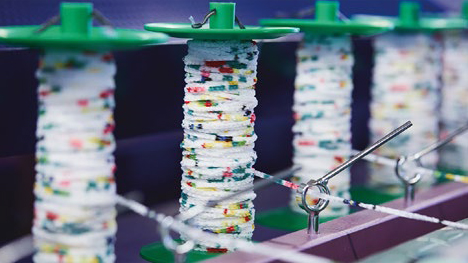
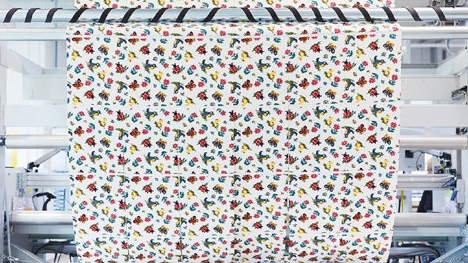
Feiler Japan Co., Ltd., a subsidiary of Sumitomo Corporation, imports, plans, and sells products of the German textile brand “FEILER”, which features chenille fabrics. Feiler purchases all cotton yarns used for chenille fabrics from companies certified under OEKO-TEX® Standard 100*1, which meets international safety standards for textile products.
SC Foods Co., Ltd., a member of the Sumitomo Corporation Group, won the Silver Award in the Trader category at the second Fairtrade Japan Awards, announced in November 2025. This is an award sponsored by Fairtrade Label Japan, a specified non-profit organization, that honors and recognizes companies and organizations that have made outstanding achievements in promoting fairtrade in Japan. SC Foods was selected in recognition of its proactive import of fairtrade coffee and sesame seeds from around the world and enhanced the relationship between the origin countries and Japan by, for example, joining Golden Cup CAM - the contest of the Fairtrade coffees from Central America and Mexico as a judge. SC Foods also won the first Fairtrade Japan Awards, announced in October 2023.
SC Foods is constantly pursuing to distribute coffee that is not only delicious, but also contributes to a sustainable and rich future of food. Through the initiatives, SC Foods also aims to communicate the socially beneficial significance of the products. As part of this effort, SC Foods imports and sells fairtrade certified coffee, which is good for society and the global environment. Specifically, SC Foods collects detailed information from suppliers with whom we have built relationships over many years about how the fairtrade premium, which is paid based on the sales volume of fairtrade certified coffee, helps the production area. In addition to providing products to roasters and consumers who purchase our products, SC Foods also collaborates with fairtrade-related organizations both domestically and internationally to actively engage in activities to expand awareness and purchasing of fairtrade certification itself.
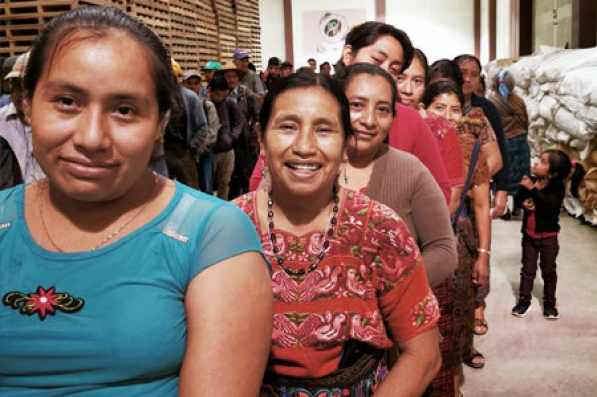
One example of fairtrade certified coffee SC Foods handles is Con Manos De Mujer (CMM: English name: WOMAN'S HAND). CMM certification was launched in 2010 by Mayacert S.A. together with the Asobagri cooperative with the aim of improving women's social status and economic environment. The premium added to the price of certified coffee is transformed into scholarships and medical expense subsidies, providing a platform for the female producers who belong to the cooperative to thrive and help them achieve self-realization.
SUMMIT, INC., a member of the Sumitomo Corporation Group that operates a supermarket business, handles marine products that have acquired ASC* certification for some of its marine products for the purpose of sustainable procurement and environmental and social considerations. In addition, SUMMIT, INC. develops products with a focus on sustainable perspective.

Sumisho Realty Management Co., Ltd., a real estate asset management business of the Sumitomo Corporate Group, has identified seven material issues and is implementing initiatives to adapt to changing global trends, meet the expectations of stakeholders, and contribute toward a sustainable society. As a real estate management company, it also believes that incorporating ESG elements into its investment decisions and operational processes is essential for maximizing medium- to long-term value for investors. For this reason, it defines and implements basic policies toward ESG.
| Material Issues | Initiatives | |
|---|---|---|
| E |
|
|
|
|
|
| S |
|
|
|
|
|
|
|
|
| G |
|
|
|
|
|
SRM believes that it is indispensable as a real estate management company to include environmental, social and governance (ESG) factors in investment decisions and management process for maximization of unitholder value over the medium to long term, and thus establishes the following basic policies on ESG and puts them into practice.
We became an ordinary member of the RSPO in 2019. Further, our consolidated subsidiaries SC Foods Co., Ltd. And Summit Oil Mill Co., Ltd. obtained RSPO supply chain certification in 2021.

We obtain FSC (FSC-C016535) certification, an international forest management certification system, and provide customers with FSC-certified products mainly from our group-companies.
We obtain PEFC CoC certification, an international forest management.
(PEFC/31-31-1393 ・ PEFC/31-31-1559)
In September 2019, we became the first Japanese company to obtain SBP certification for CoC (Chain-of-Custody) and Collection and Communication of data. SBP is a certification system providing assurance that woody biomass used in energy production is sourced from legal and sustainable sources.
We hold ISCC PLUS, an international certification for bio-based products. This allows us to trade ISCC PLUS certified products. In addition, the following group companies have also obtained ISCC PLUS certification.
We hold ISCC EU, an international certification for sustainable fuels compliance with Europe Union set out in Renewable Energy Directive. This allows us to trade ISCC EU certified products.
We hold ISCC CORSIA, an international certification for CORSIA (the Carbon Offsetting and Reduction Scheme for International Aviation) eligible fuels. This allows us to trade ISCC CORSIA certified products.
We are a member of the Aluminium Stewardship Initiative (ASI), the global aluminium industry organization. As an active participant in trading aluminium materials and products globally, we support ASI activities and standards across the global aluminium value chain.