
Jump to section


View Sumitomo Corporation's Sustainability : Social Responsibility
The Sumitomo Corporation Group operates TV shopping, food supermarket, and other businesses that handle consumer products and services, but will not handle products that seriously negatively impact society and run counter to corporate social responsibility, including: any product that has not been confirmed as safe and therefore is socially questionable; any product that may impair human rights, dignity or reputation; any product that defames or disparages another company; and any product that infringes on intellectual property, including patents, utility model rights, design rights, trademarks and copyrights, or other rights of third parties. We also comply with laws and regulations on product and service safety and quality standards. If any product or service we provide has a quality problem, we will take prompt actions to prevent related damage from spreading, and make efforts to investigate the cause of the problem and prevent a recurrence.
In lifestyle, retail, and other business areas that deliver products directly to consumers, we are fully aware of the significance of the impact that advertising expressions have on consumers. Placing first priority on safety and security, we carry out advertising and marketing activities with due consideration of our social responsibilities. Taking into account the position of consumers and using factual expressions in principle, we will not use misleading expressions describing the characteristics or quality of our products and services.
The Sumitomo Corporation Group operates large-scale resource development, infrastructure development, manufacturing, processing and sales businesses in countries around the world, and therefore the impact of its business activities on the economies and lifestyles of these countries and regions is significant. Recognizing that we have a responsibility to pay attention to the history of the country or region and care about local residents as we carry out our business activities, we contribute to the development of local communities not only by creating and promoting local employment but also by working on skills advancement for sustainable development, support for self-reliance, and protection of the local culture and the environment.
Sumitomo Corporation conducts job training programs through Toyota Iraq, a subsidiary, to create local opportunities for stable employment and enhance the skills of job seekers. Prolonged conflict in Iraq has had tremendous impacts on the people, and more than 3 million people have been forced to leave their homes and have become internally displaced persons (IDPs).
Over recent years, employment has become a more serious issue for the younger generation in particular, and creating local skills training and employment opportunities is an urgent matter. Because of such problems, Toyota Iraq has been working with the UNDP since 2016 to conduct job training programs for such IDPs. Starting in 2020, the company has also been working with the International Organization for Migration, an organization affiliated with the United Nations, to conduct new programs offered to persons other than IDPs as well. To date, 153 persons have completed a total of 12 job training programs. These graduates have been offered support in finding work at local companies, and the programs themselves are continuing.
Sumitomo Corporation hopes to achieve sustainable development of local communities through these programs and will continue to support the creation of job opportunities and skill enhancement in Iraq through these business activities.

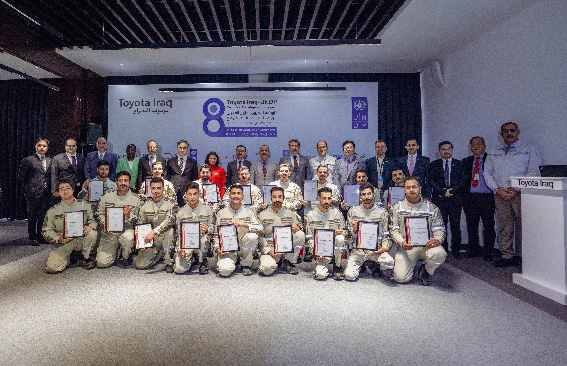
Trainees receiving training on vehicle maintenance, parts warehouse management and customer services
Aiming to make life more enjoyable by addressing social issues from the consumers' perspective, the Sumitomo Corporation Group places the highest priority on food safety and health, and provides stable access to high-quality nutritional sources through its business. We also aim to develop and provide value-added specialty products and services that meet diverse needs, including health- and nutrition-conscious products and services, as well as environmental and sustainability needs.
The Sumitomo Corporation Lifestyle Group operates across a broad value chain related to food, from the procurement of raw materials to the delivery of products and services to consumers. In addition to contributing to food safety and security, we also address nutritional issues by offering food products with superior functionality. We recognize various associated issues and implement initiatives to prevent food-related hazards from occurring and reduce their negative impact.
The Sumitomo Corporation Lifestyle Group prioritizes food safety and security. Through food safety management activities such as product management (raw materials, additives, labeling), supplier management (quality control, process management), collection of food safety information, and employee training, we comply with food-related laws and regulations. We strive to prevent the occurrence of food-related hazards and provide safe and secure food, processed food, and fresh food.
At SUMMIT,INC., we have developed a broad value chain that delivers products and services to consumers. In addition to contributing to food safety and security, we also address nutritional issues by offering highly functional food products. We recognize various associated issues (see examples below) and implement initiatives to prevent them from occurring and mitigate their impact.
| Key Issues | Main Themes | Management Approach and Awareness |
|---|---|---|
| Reducing negative impact of food products on customers | Safety Management of Processed and Fresh Foods |
Safety Management using a “Store Hygiene Management Plan” based on the HACCP concept Conducting suppliers’ factory inspections |
| Responsible advertising, marketing, and promotion of food products | Provision of Information on Food Allergies and Food Additives | Thorough display management through the raw material registration system. Improvement of verification skills related to food labeling. |
| Responsible advertising, marketing, and promotion of alcoholic beverages | Providing information on preventing drinking by persons under 20 years of age and pregnant women | In-house training programs regarding Liquor Tax Law, etc. |
| Access to better nutrition | Labeling of nutritional information for in-store processed products | Providing information to help customers choose the foods they want |
At SUMMIT,INC., we set and manage our own standards to ensure that we deliver products that our customers can enjoy with peace of mind.
| Process | Food safety |
|---|---|
| Distribution Management |
|
| Store management |
|
The Food SBU and SC Foods established a food safety management team in 2003 and have been actively working on food safety management.
The Food SBU and SC Foods consistently contribute to "food safety and security" from the procurement of raw materials to the delivery of products and services. We recognize various issue involved (see below) and implement initiatives to prevent food-related hazards from occurring and reduce their negative impact.
| Key Issues | Main Themes | Management Approach and Awareness |
|---|---|---|
| Ensuring Food Safety and Hygiene | Safety Management of Imported Foods, Processed Foods, and Fresh Foods (Origin, Manufacturing Process, Factory, Raw Materials, Food Additives, Foreign Substances, Residual Pesticides, Genetically Modified Foods, etc.) |
Food safety management of imported foods, processed foods, and fresh foods in accordance with food safety management regulations by food safety personnel. Supplier management (quality control system surveys, factory inspections, etc.). Product management (product information management through product cards). Education and awareness for members. |
| Responsible Marketing in Food | Provision and Display of Accurate Information on Raw Materials, Food Additives, Origin, and Food Allergies for Imported Foods, Processed Foods, and Fresh Foods | Accurate display and provision of product information (raw materials, food additives, origin, food allergies, |
The Food SBU and SC Foods Co., Ltd., are working to provide accurate and easy-to-understand food labeling and information in compliance with laws and regulations by checking product information such as ingredients, food additives, allergens related to food allergies, and country of origin by the food safety management staff.
| Process | Food safety |
|---|---|
| Ingredient Management |
|
| Manufacturing and Quality Control |
|
With the diversification of dietary habits, the globalization of food distribution, and a growing awareness regarding health issues, consumers are increasingly paying attention to the safety and quality of their food. On the other hand, there have been cases of incidents and problems threatening food safety, such as those regarding violation of food labeling standards, residual pesticides, and the distribution of foods using unauthorized additives.
In response to these issues, the Food SBU and SC Foods Co., Ltd. have established a quality management system centered on food safety personnel (Food SBU Food Safety Personnel and SC Foods Food Safety Management Department) to prioritize food safety.
The Food SBU and SC Foods implement the following initiatives regarding food safety management:
When initiating business with a new supplier, the Food SBU and SC Foods conduct due diligence in accordance with our Food Safety Management Regulations. A team responsible for food safety (Food SBU food safety staff and SC Foods Food Safety Management Department) judges the necessity of factory inspections after confirming the supplier's quality management system, manufacturing process, transaction status, food safety standard certification status, and sustainability compliance status, etc., using a preliminary quality management survey.
In accordance with food safety management regulations, in addition to initiating new transactions with suppliers, factory inspections deemed necessary by food safety personnel are conducted based on the management system of quality and manufacturing processes, product risk characteristics, and product handling status. These inspections are carried out by food safety personnel at a frequency of once every five years.
The procedures and results regarding factory inspections are as follows.
| Process | Description |
|---|---|
| Factory Inspection Targets | The Food SBU and SC Foods Co., Ltd. conduct preliminary surveys of supplier factories of imported and processed food products in accordance with the Food Safety Management Regulations (Contractor Management Manual and Purchasing Management Manual) to determine their management systems and food safety certification status. In addition, we conduct factory inspections on the factories that the food safety manager determines to be necessary, taking into consideration the risk characteristics and handling conditions of the products, using the factory inspection sheet. |
| Frequency of Factory Inspections | Inspections are conducted at the start of transactions and once every five years in principle. (Inspections are conducted each time the food safety officer deems it necessary) |
| FY2023 | FY2024 | FY2025 | |
|---|---|---|---|
| Factory inspections results (Number of factories) | 15 factories | 17 factories | 13 factories |
Group companies within the Food SBU have obtained food safety standard certifications in accordance with HACCP-based food safety management. They have established and are operating food safety management systems.
Group companies that have acquired food safety standard certifications that comply with HACCP, such as SQF, FSSC22000, ISO22000, and JFS.
The Food SBU and SC Foods conduct
Regarding responsible marketing and compliance related to food safety, the Food SBU and SC Foods conduct training programs aimed at increasing employees' awareness and knowledge of food safety, legal compliance, and sustainability.
| ① Food safety management introduction seminar (held at least once a year) |
<Main Contents>
<Target Persons> |
|---|---|
| ② Food Compliance Committee (6 times a year, bimonthly) |
<Main Contents> <Participants> |
| Attendance status | FY2023 | FY2024 | FY2025 |
|---|---|---|---|
| Number of participants | ①10 people ②14 people/time |
①10 people ②12 people/time |
①17 people ②13 people/time |
In the food sector, the Sumitomo Corporation Lifestyle Group operates a wide range of food businesses from upstream to downstream, including distribution and processing businesses centered on fresh fruits, vegetables, and meat, raw material businesses such as grains, fats/oils, and sweeteners, and retail businesses such as supermarkets and drug stores. We are developing our business with the concept of health and wellness and working to address social issues.
In developed countries, with the arrival of super-aging societies, increased medical costs and an increase in the number of people requiring nursing care due to undernutrition and imbalanced nutrition among the elderly have become major issues. Furthermore, it is necessary to maintain nutrition for home care patients who require dietary restrictions due to diabetes or kidney disease, and to ensure a nutritional balance to prevent obesity. Meanwhile, emerging countries face social issues such as hunger and malnutrition caused by poverty.
Some of SUMMIT, INC. and Tomod’s CO., LTD. stores are running the Health Community Corner "Kenkomi" as a place that supports local consumers with food and health. We also offer them services such as health condition self-check, nutrition guidance and health consultations by our resident registered dietitian, and recipe introductions.
The Sumitomo Corporation Lifestyle Group will contribute to solving these social issues by improving nutrition through the stable supply of food and providing foods and services with high added value in nutritional terms, thereby creating a society where people can live healthy and prosperous lives.
The labeling of processed foods is crucial information for ensuring the safety of individuals with food allergies when consuming food and for preventing health issues due to excessive intake of specific substances. SUMMIT, INC. is committed to providing accurate and easy-to-understand food labeling and information in compliance with laws and regulations in order to prevent health issues for people with food allergies.
Food SBU and SC Foods Co., Ltd. are working to provide accurate and easy-to-understand food labeling and information in compliance with laws and regulations by checking product information such as ingredients, food additives, allergens related to food allergies, and country of origin by the food safety management staff.
SC Foods Co., Ltd. and Summit Oil Mill Co., Ltd. procure premium vegetable oils with a variety of functionalities from around the world in response to growing health-conscious needs and provide them to customers and consumers. Flaxseed oil and perilla oil contain omega-3 (n-3 fatty acids), which are "essential fatty acids" that cannot be produced in the body and support the health maintenance functions of the human body, and are also being developed as functional foods.
Wellneo Sugar Co., Ltd. aims to realize "Well-being" (happiness and health) by exploring the power and potential of sugar.
Wellneo Sugar group offers a variety of sugar and sweetener products, including general sugar, to meet the needs of consumers and to contribute to solving social issues. These include products using galactooligosaccharide (GOS), which promotes the growth of bifidobacteria in the intestines, and “Cyclodextran,” a unique cyclic oligosaccharide that helps inhibit dental plaque formation and supports oral care.
"Cup Oligo", developed by Wellneo Sugar using biotechnology, is an oligosaccharide made from the lactose contained in milk. Its main component GOS, is effective in promoting the growth of bifidobacteria. "Cup Oligo" has superior physical properties as a sweetener and-as a substance also present in breast milk- is reliable in terms of safety. Research on the functionality of GOS is currently attracting a lot of attention, with the number of papers increasing all over the world.
SUMMIT, INC. runs community-based retail business and implement the following initiatives to support the socially vulnerable groups.
SUMMIT, INC. sells alcoholic beverages and tobacco, and is committed to strictly preventing the sale of alcoholic beverages and tobacco to persons under 20 years of age.
Alcohol consumption by people under 20 years of age has a number of negative effects, including those on health, such as impeding physical growth (sexual function, brain, liver, etc.), causing higher risk of becoming addicted to alcohol. Also people who start drinking at a younger age are more likely to engage in risky behaviors.
As a responsible business operator, SUMMIT, INC. recognizes that drinking alcohol can have these negative effects on people under the age of 20. We take the following precautionary measures and work diligently to prevent the negative effects of alcohol consumption on people under the age of 20 and other vulnerable groups in society.
1. Warning to Customers
We give warnings to customers about the sale of alcohol by displaying posters stating that we do not sell alcoholic beverages to persons under 20 years of age, and by indicating that the products are alcoholic beverages.
In addition, store managers regularly check to ensure that these posters and displays are appropriate and properly operated.
2. Age verification at the cash register
To prevent the sale of alcoholic beverages to persons under 20 years of age, we always check the age of customers when selling alcoholic beverages. At the self-checkout system, we have introduced a system in which an alarm is turned on when an alcoholic beverage is purchased, and turned it off after an attendant confirms that no alcohol is sold to those under 20 years of age.
3. Regular employee training
At SUMMIT, INC., we ensure that alcoholic beverages are not sold to anyone under the age of 20 by regularly educating and enlightening our employees on alcohol-related knowledge and warnings to customers. We include this information in department training textbooks and alert store employees at meetings and through letters before seasonal occasions when alcohol consumption increases, such as during summer vacation and the end of the year.
4. Sales of non-alcoholic products
At SUMMIT, INC., we sell products with fewer negative effects, such as non-alcoholic products and alcoholic beverages with lower alcohol content.
SUMMIT, INC. is committed to coexisting with the local community, not only by fulfilling its function as an infrastructure that supports daily lifestyles of the community, but also by working to revitalize the community through collaboration with schools, shopping districts, and municipalities, as well as creating "places for people to interact and gather". Supermarkets, where people come together, facilitates communication. We aim to be a place where the community can feel “joyful” and “relaxed”, supporting local life as infrastructure.
In order to continue to be an infrastructure that supports people's lives even in the event of a disaster, we have developed a "Business Continuity Plan for Natural Disasters," concluded disaster support agreements with some municipalities where our stores are located, and distributed our original disaster prevention guidebooks. In addition, the company accommodates local elementary and junior high school students for store tours and hands-on learning opportunities, participates in donation activities through the sale of collected PET bottle caps, and hosts fun in-store events to deepen engagement with the local community.
As another example of our efforts to coexist with the local community, we host the Suginami Hanagasa Festival every year at Ohmiya-Hachimangu shrine in Suginami-ku, Tokyo where SUMMIT, INC.’s headquarter is located. The festival features food booths sponsored by our business partners, the iconic Hanagasa-odori parade by local community and our employees, and events such as raffles, attracting more than 20,000 visitors every year and becoming a popular winter feature.
In the rice sector, which has the highest environmental impact in terms of GHG emissions within Japan's agriculture, forestry, and fisheries sectors, SC Foods is promoting initiatives to reduce GHG emissions. Compared to traditional farming methods, direct seeding rice, where seeds are sown directly in paddy fields, is expected to have approximately one-fourth lower GHG emissions. Furthermore, it is anticipated to reduce labor and expand the scale of operations. By expanding the handling of direct seeding rice, we will continue to contribute to reducing environmental impact and addressing food issues.
We are also working on zero emission initiatives that generate no waste and toxic substances.
In the island of Tanegashima, the northern limit of Japan’s sugarcane production region, cultivation of sugarcane, which is considered to be an important staple crop, occupies around 30% of the island’s total acreage and around 60% of its total field crops. As a business operating in such environment, Shinko Sugar, a company of the Sumitomo Corporation Group, utilizes the byproducts and waste generated during the production process of sugar products as compost and boiler fuel inside and outside the factory. Shinko Sugar is also giving its utmost consideration to the environment through measures such as implementing an appropriate treatment process in liquid effluent discharge and gas emissions to ensure the removal of toxic substances.
Additionally, SC Foods has entered into a collaboration agreement with Kyoritsu Women's University and Kyoritsu Women's Junior College on February 5, 2022.
This agreement aims to promote mutual cooperation through comprehensive collaboration in education, research, human resource development, and the advancement of industry and society.
SC Foods and Kyoritsu are jointly promoting the “Tanegashima Soto (domestically-produced raw sugar by Shinko Suger) Project” to increase awareness of SC Foods’ product, Tanegashima Soto. Through developing recipes that use Tanegashima Soto and organizing food education exchanges in Tanegashima, they are also contributing to regional revitalization.
Also as part of this agreement, SC Foods delivered a lecture about “From Production to Consumption of Food from the Perspective of a Trading Company” at the “Special Lecture on Food Science” hosted by the Department of Food Science and Nutrition of the University in 2025 academic year. The lecture highlighted the diverse roles and importance of SC Foods as a trading company, which are involved in every stage of the process from production sites to consumers' hands, including sustainable activities.
With the increasing demands on drugstores due to the aging of the population , Tomod’s Inc., our group company, aims to become a "Go-to drugstore" that supports the healthy and enriching lives of people in the community. In addition to the traditional functions of a drugstore and dispensing pharmacy, Tomod's offers a variety of services that leverage its expertise, including counseling by Registered Dietitian, seminars and health events held in collaboration with government agencies, educational institutions, and businesses, and specific health guidance, as well as online medication guidance via video call, and nutritional guidance for home patients accompanied by a dietitian during home medication dispensing. Tomod's is dedicated to developing various types of “Go-to drugstore” that meets the needs of local residents. For example, Nerima Takanodai store with the concept of "a pharmacy where customers without prescriptions can easily drop by." established an event space to promote interaction with the local community, and collaborates with the Nerima Takanodai Regional Comprehensive Support Center. By going beyond the framework of a traditional dispensing pharmacy, this store is promoting initiatives designed to serve as a hub for community collaboration.
Yakuju Corporation, a core company of the SC Pharmacies Group, operates community-based pharmacies under its corporate philosophy: “Together with local communities, we create healthy daily lives and expand a circle of smiles and appreciation.” Based on this philosophy, Yakuju is promoting initiatives aimed at realizing “Healthy People, a Healthy Society, and a Healthy Planet.”
From the perspective of “Healthy People,” Yakuju provides home dispensing services by delivering medications to patients’ homes and care facilities. In collaboration with physicians, nurses, and other healthcare professionals, the company supports safe medication use, manages unused medicines, and responds to emergencies, thereby helping create a secure living environment.
In addition, Yakuju is promoting a shift from a conventional prescription-based pharmacy model to a comprehensive health support model. In addition to dispensing services, the company provides nutritional counseling, specific health guidance, and medical walking programs. By leveraging collaboration among pharmacists, registered dietitians, and physical therapists, Yakuju supports health management from the perspectives of medication, nutrition, and exercise, contributing to the prevention of lifestyle-related diseases and the extension of healthy life expectancy.
From the perspective of “Healthy Society,” Yakuju conducts health consultations and awareness-raising events for local residents and supports community-building initiatives. Furthermore, through Yakuju Will Co., Ltd., a special subsidiary, the company promotes the employment of people with disabilities while supporting their independence and career development.
From the perspective of “Healthy Planet,” Yakuju promotes environmental initiatives, including in-store eco-station activities such as collecting plastic bottle caps and used cooking oil. In addition, the company is expanding the use of renewable energy and participating in forest conservation programs, thereby contributing to environmental protection.
“Social license to operate” refers to the concept of obtaining ongoing acceptance and trust from society to conduct business activities. In the mining business in particular, this entails taking efforts to mitigate environmental impacts and to contribute to the sustainable development of local communities. The Sumitomo Corporation Group places strong emphasis on this concept in its mining business. In addition to strict legal compliance, we are committed to rehabilitation initiatives at all mining sites where we operate, with the aim of minimizing environmental footprint and contributing to the restoration of the ecosystem.
Mining operations are inherently finite and therefore it is important to support the long-term sustainability of local communities by promoting economic self-reliance and minimizing environmental impacts after closure. When participating in mining projects, the Sumitomo Corporation Group develops a business plan based on the life of the mine, which incorporates the costs and measures required to restore the site to its original state. Upon mine closure, we implement appropriate measures in full compliance with local laws and regulations, ensuring that land restoration and post-closure management are conducted responsibly and effectively.
The Sumitomo Corporation Group respects personal information provided by customers and pays the utmost attention to data privacy. We recognize their importance particularly in the media business and the digital business, which require strict and proper management, and accordingly ensure compliance with laws and regulations on the handling of personal information, guidelines set forth by administrative bodies, and other standards. For example, Jupiter Shop Channel, as an operator of the “Shop Channel” for TV shopping, and SCSK as an IT services provider are assessed as having established systems to take appropriate measures to protect personal information in compliance with the Japanese Industrial Standards JIS Q 15001 (Personal Information Protection Management System - Requirements) and are granted the right to use the privacy mark. In operating the media business, including the multichannel programming distribution, we are making efforts to meet society’s trust by observing freedom of speech and expression, following the spirit of democracy, respecting basic human rights and public opinion, and protecting law and order.
The Sumitomo Corporation Lifestyle Group is a member of the Association for the Safety of Imported Foods, Japan (ASIF) and the Japan Food Additives Association(JAFA). Through these memberships, the Group seeks to strengthen its food safety capabilities by gathering relevant information, enhancing internal knowledge, and engaging in industry dialogue, thereby supporting the provision of safe and reliable food products.
<Association for the Safety of Imported Food, Japan>
ASIF was established in September 1992 by volunteer companies involved in imported foods, with the support and cooperation of the then Ministry of Health and Welfare (now the Ministry of Health, Labour and Welfare), in response to the increase in imported foods and rising public concern regarding their safety. Its mission is to help ensure the safety of imported foods and thereby contribute to consumer confidence and the protection of public health.
ASIF’s principal activities include the development of human resources through the administration of the Imported Food Sanitation Manager certification system; education and awareness-raising through training programs and seminars; the collection and dissemination of food safety information, including updates on regulatory amendments and overseas developments; collaboration with government authorities and support for industry stakeholders; and consultation and public outreach relating to imported foods.
In particular, the Imported Food Sanitation Manager system supports the development of qualified personnel responsible for food safety management and promotes voluntary management frameworks among import food businesses. Through these efforts, the system contributes to the assurance of food safety and the stable supply of imported food products.
<Japan Food Additives Association>
The Japan Food Additives Association was established in 1982, based on the Japan Federation of Food Additives Organizations, by companies and organizations engaged in the manufacture, import, sale, and use of food additives, with the objective of promoting accurate knowledge of food additives. It was reorganized as a general incorporated association in April 2014.
In coordination with the Ministry of Health, Labour and Welfare and other relevant authorities, the Association works to promote proper understanding of the manufacture, sale, and use of food additives among its members, while also fostering broader public understanding of their safety and usefulness. Through these activities, it aims to contribute to the sound development of the food-related industry and to the improvement of consumers’ dietary lives and public health.
As a member of the Association, Sumitomo Corporation works to deepen its knowledge of food additives through the acquisition and use of relevant information, as well as participation in training programs.
It is important to our business that we thoroughly address issues regarding the potential negative impacts of alcoholic products such as alcoholism, alcohol poisoning, and drinking under 20 years of age. We also recognize that these negative impacts are especially important with regard to vulnerable groups. Therefore, The Sumitomo Corporation Group are members of the following industry organization, in order to participate in knowledge sharing and monitoring the latest market trends and best practices.
<Tokyo Retail Liquor Sales Association>
Regarding alcoholic beverages, in order to protect the liquor tax by law and the product's characteristics as an intoxicating beverage, both manufacturing and sales are regulated by the liquor sales license system, and only licensed individuals or entities can sell alcoholic beverages.
The license is granted based on personal requirements such as the licensee's social qualifications, management knowledge/sales ability, and management capital requirements.
The social responsibility of those who have been granted an alcoholic beverage sales license is to comply with related laws and regulations, take into consideration the social harm caused by the characteristics of the product and national health, and ensure that the culture of drinking is inherited, stable business management, and efforts to maintain and improve a responsible drinking environment, and to promote market competition under fair rules, while striving for measures that emphasize the welfare and interests of the public.
To this end, we will strive to promote the common interests of maintaining individual management and the development of the industry as a whole through activities based on close communication and the spirit of mutual support fostered by the association.
Support for World Food Programme (WFP)
SC Foods Co., Ltd., is a supporter of the United Nations World Food Programme WFP Association (United Nations WFP Association), a certified non-profit organization that supports the WFP United Nations World Food Programme, whose mission is to eradicate hunger and poverty, and is the official support window for the WFP United Nations World Food Programme in Japan.
Sumitomo Corporation Group’s members delivering products directly to consumers (i.e., Jupiter Shop Channel operating the “Shop Channel” for TV shopping, the food supermarket chain SUMMIT,INC, and Tomod’s operating pharmaceutical-dispensing drug stores) are participating in the following industry initiatives (as of June 2024).
Japan Direct Marketing Association (JADMA)
JADMA is the official representative body of the direct marketing industry, as specified in Article 30 of the Act on Specified Commercial Transactions. It collaborates with consumer organizations and public offices to create and disseminate guidelines for fair trade, resolve complaints from consumers and businesses, identify industry trends through surveys and information exchange, and grant the JADMA Mark to direct marketing companies (Full Members) that comply with all relevant laws and regulations.
All Japan Supermarket Association (AJS)
AJS was established in 1962 to contribute to the development of the entire supermarket industry by supporting member companies from the viewpoint of education, products, and information.
Japan Supermarkets Association (JSA)
JSA was established in 1999 to plan, propose, and promote food distribution policies together with local communities.
Japan Chain Stores Association (JCA)
JCA was established in 1967 to rationalize distribution systems, facilitate their modernization, and contribute to people’s lives by improving retailing management through the promotion of healthy development and expansion of chain stores.
Nippon Pharmacy Association (NPhA)
The main purposes of this association are as follows, based on three key words of safety, convenience and economy which are to clarify the roles of national insurance pharmacies to prioritize the profit of Japanese people. It also aims to contribute to realize health insurance pharmacies that can be truly trusted and satisfied by Japanese people through activities such as fostering health insurance pharmacies with people's viewpoint, providing relevant information and streamlining pharmacy operation and establishing various infrastructures to do so.
Tomod’s discontinued tobacco sales at all of its stores at the end of July 2017 to help customers achieve a healthy and affluent life. Even before this, Tomod’s has supported efforts to quit smoking, introducing customers to medical institutions that provide smoking cessation outpatient service in the neighborhood, as well as products that help them to quit smoking, and providing nutritional guidance from national registered dietitians before and after smoking cessation. Additionally, to encourage its employees to work together with customers in quitting smoking, Tomod’s introduced a welfare program for employees that supports the smoking cessation program. In recognition of these activities, the Japan Society for Tobacco Control recently offered a letter of appreciation to Tomod’s.
In June 2020, the Council on Promoting Partnership Building for Cultivating the Future, whose members consist of the Chairman of Keidanren (the Japan Business Federation), the Chairman of the Japan Chamber of Commerce and Industry, the President of Rengo (the Japanese Trade Union Confederation) and the relevant ministers (the Minister of State for Economic and Fiscal Policy; the Minister of Economy, Trade and Industry; the Minister of Health, Labour and Welfare; the Minister of Agriculture, Forestry and Fisheries; and the Minister of Land, Infrastructure, Transport and Tourism), introduced a framework called the Declaration of Partnership Building.
This framework allows a company to declare, in the name of the company’s representative, that it will build a new partnership for shared prosperity throughout the supply chain by reinforcing relationships with supply chain partners and enterprises that seek to create value.
By adopting the Declaration, companies publicly commit to:
Sumitomo Corporation has endorsed this initiative and expressed its commitment to building trust and creating new value, and to maintaining and enhancing such trust and value, through sound business activities with suppliers, customers, joint venture partners, financial institutions, logistics companies and all other business partners. (June 13, 2025)